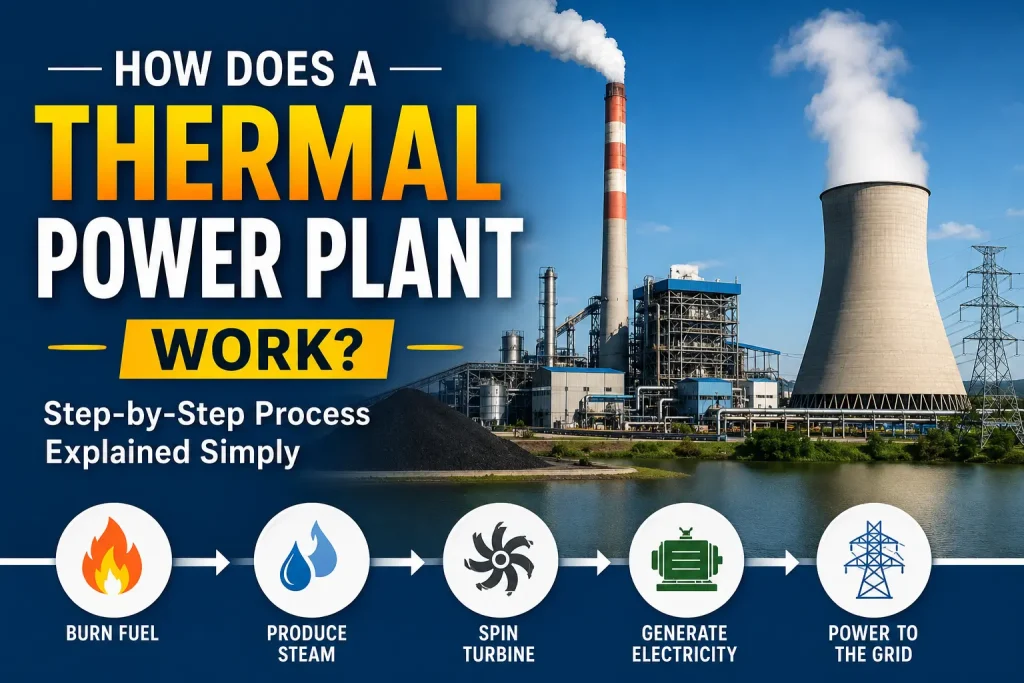
Every day, billions of people flip a switch without thinking twice about where that electricity actually comes from. There are 10 main ways to generate electricity from splitting uranium atoms in a nuclear reactor to harvesting sunlight on a rooftop solar panel.
This guide breaks down each electricity generation method in plain English: how it works, where it’s used, and which ones you can actually use at home.
Key Takeaways
- Electricity generation is the process of converting another form of energy, heat, motion, light, or chemical reactions into electrical power.
- There are 10 main ways to generate electricity, from burning fossil fuels to splitting atoms to capturing sunlight.
- Thermal power (natural gas and coal) produces the most electricity in the US today, but renewables are growing fast.
- The cleanest methods are solar, wind, and hydroelectric. They produce electricity with little to no emissions.
What is electricity generation?
Electricity generation is the process of transforming one form of energy (heat, motion, light, or chemical energy) into electrical power that can travel through wires and do useful work. The generation of electricity is what makes the modern world run.
To define power generation simply: it is the first step in the electricity supply chain, before transmission and distribution. Without it, nothing else in the grid exists.
How Electricity Is Actually Generated
Most people know electricity comes from power plants. Far fewer know why spinning a turbine creates electrical power.
The answer is electromagnetic induction, a discovery made by Michael Faraday in 1831. When a magnet moves inside a coil of wire, it pushes electrons through the wire. That flow of electrons is electrical current. This is the foundation of almost all electrical power generation on Earth.
In a power plant, the job is simple in principle: spin a magnet inside a coil fast enough, and you generate electricity. The generator converts mechanical motion into electric energy production. The turbine is what does the spinning whether it’s pushed by steam, water, or wind.
Not every electricity generation system uses a turbine, though. Solar panels skip the spinning entirely. They use the photovoltaic effect: photons from sunlight knock electrons loose in a semiconductor material, creating a direct electrical current. That’s called direct conversion. No moving parts, no heat, no turbine.
Understanding this split turbine-based generation vs. direct conversion makes every electricity generation technology easier to understand.
The Different Ways to Generate Electricity
Here are all the main electricity generation methods humans use today from the oldest to the newest.
1. Thermal Power (Coal, Gas, and Oil)
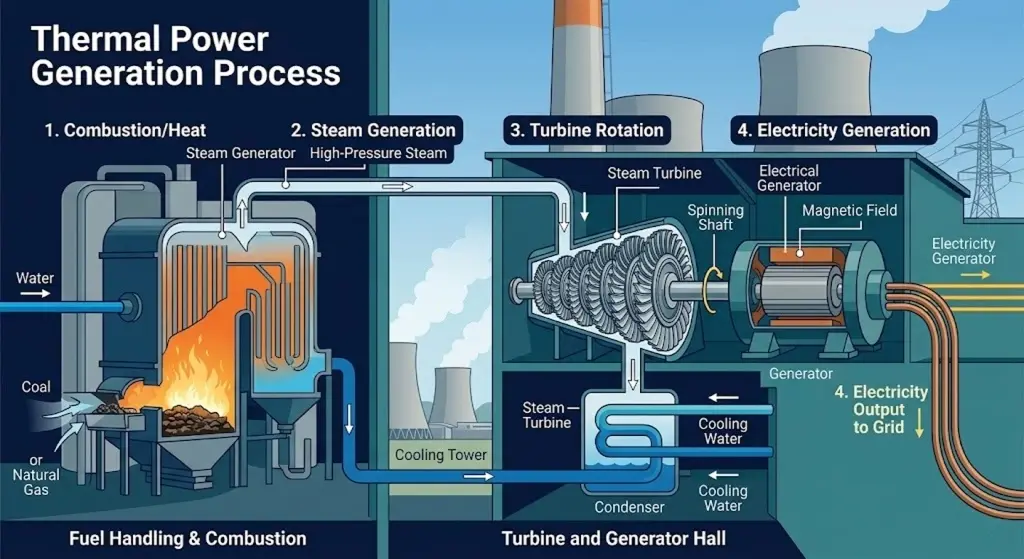
Thermal power plants burn fuel, coal, natural gas, or oil, to boil water into steam. That steam pushes a turbine, which spins a generator, which produces electricity. It is the oldest large-scale method of generating electrical energy still in use.
Natural gas alone accounts for roughly 43% of US electricity production, making thermal power the dominant generation method in the country. The downside is significant: burning fossil fuels releases CO₂ and other pollutants. This is why the world is actively building alternatives.
2. Nuclear Power
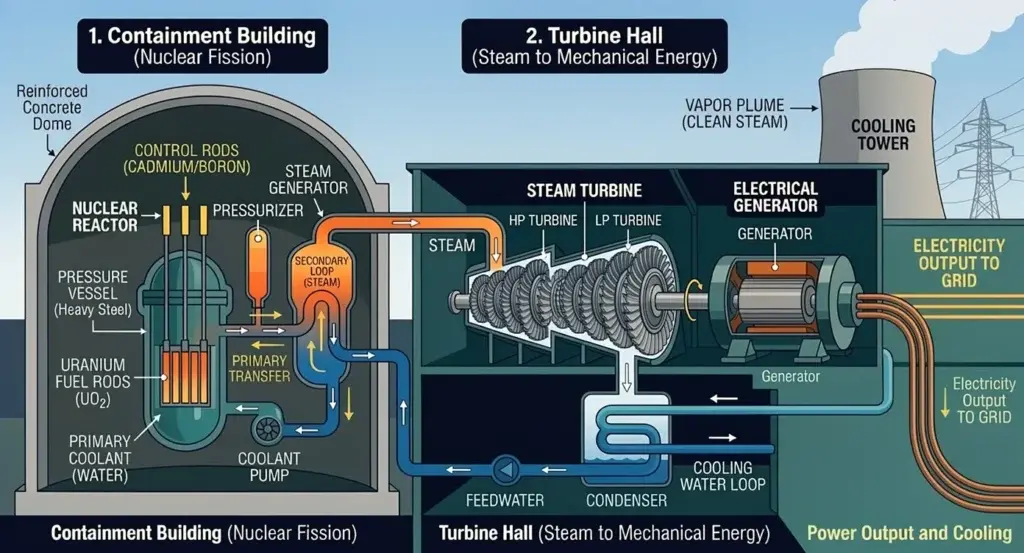
Nuclear electricity generation works on the same turbine principle as thermal power with one critical difference. Instead of burning fuel, a nuclear reactor splits uranium atoms in a process called fission. Fission releases an enormous amount of heat, which boils water into steam, which spins a turbine, which drives a generator.
Nuclear power supplies about 18% of US electricity and does so with almost zero carbon emissions during operation. It produces more energy per kilogram of fuel than any other generation method. Safety and waste storage remain the central challenges.
3. Hydroelectric Power
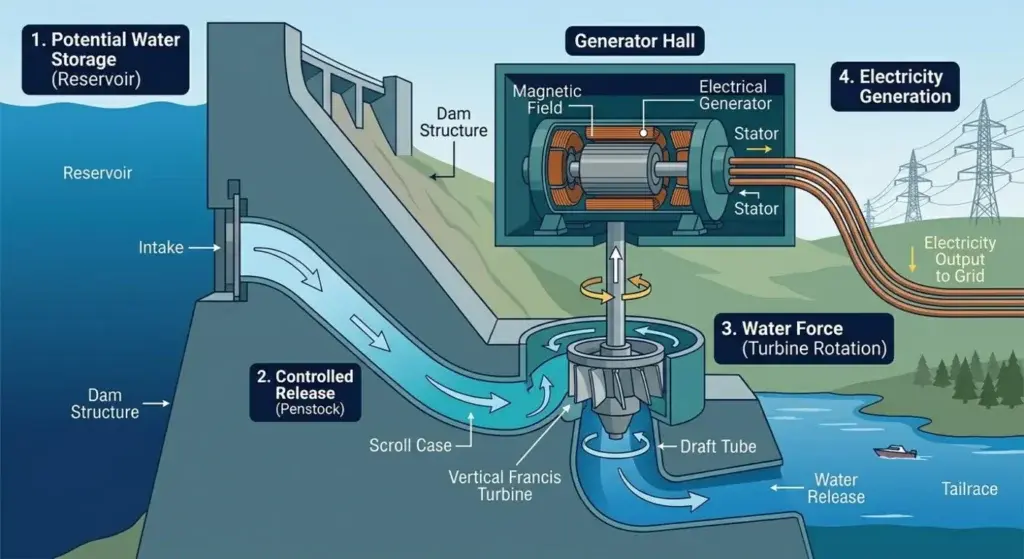
Hydroelectric power generation is one of the oldest and most reliable electricity generation systems in the world. A dam holds back a large volume of water. When released, the falling water spins turbines at the base of the dam, generating power continuously.
Hydropower provides about 6% of total US electricity and over 16% of global electricity production. It is clean, renewable, and highly controllable; operators can increase or decrease output almost instantly by adjusting water flow. The main limitation is geography: you need a river and the right terrain.
4. Solar Power
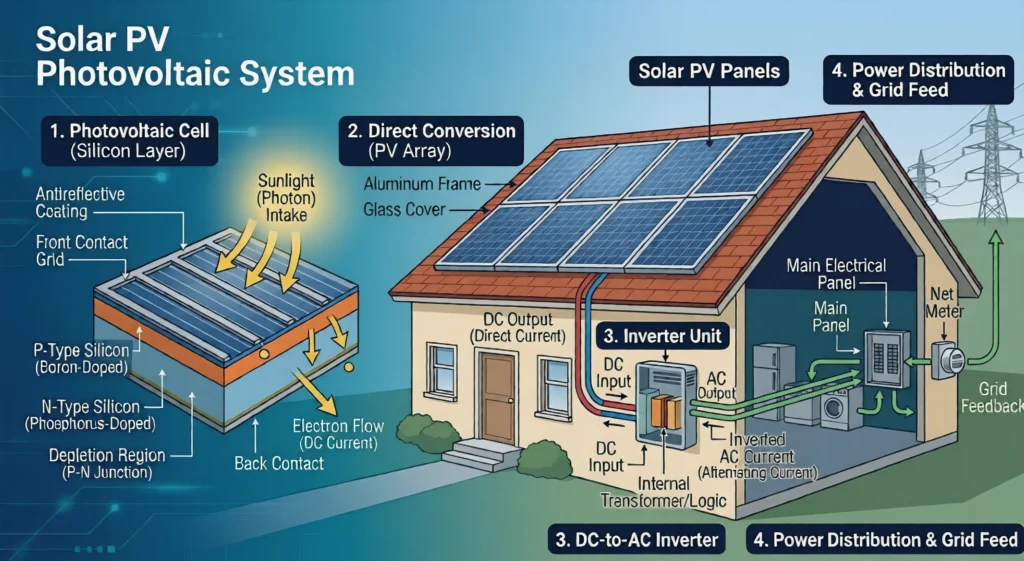
Solar electricity generation is the fastest-growing energy generation technology on the planet. Solar panels are made of semiconductor cells, usually silicon, that release electrons when photons from sunlight hit them. This creates a direct current (DC), which an inverter converts to alternating current (AC) for use in homes and the grid.
Solar now accounts for about 4% of US electricity, but that share is growing by double digits every year. Unlike turbine-based systems, solar PV has no moving parts, which means lower maintenance costs and near-silent operation. It is one of the most accessible different ways to make electricity at a household level.
5. Wind Power
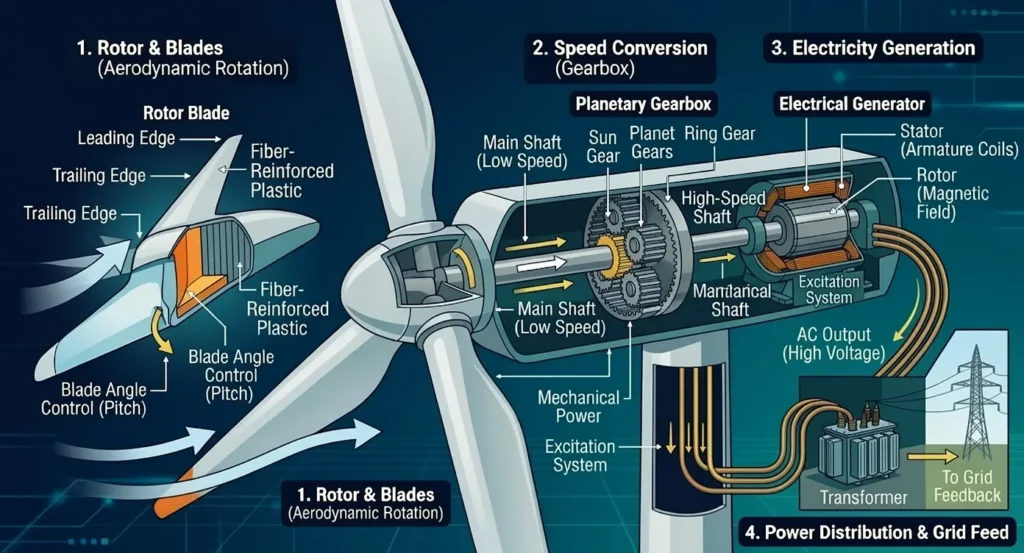
Wind electricity generation works by capturing the kinetic energy of moving air. Wind pushes the blades of a turbine, which rotates a shaft connected to a generator. The faster the wind, the more electrical energy is produced.
Wind is now the largest source of renewable electricity in the US, generating about 10% of total national electricity. Offshore wind farms, where winds are stronger and more consistent, are expanding rapidly. Wind turbines produce no emissions during operation and have a lifespan of 20–25 years
6. Geothermal Power
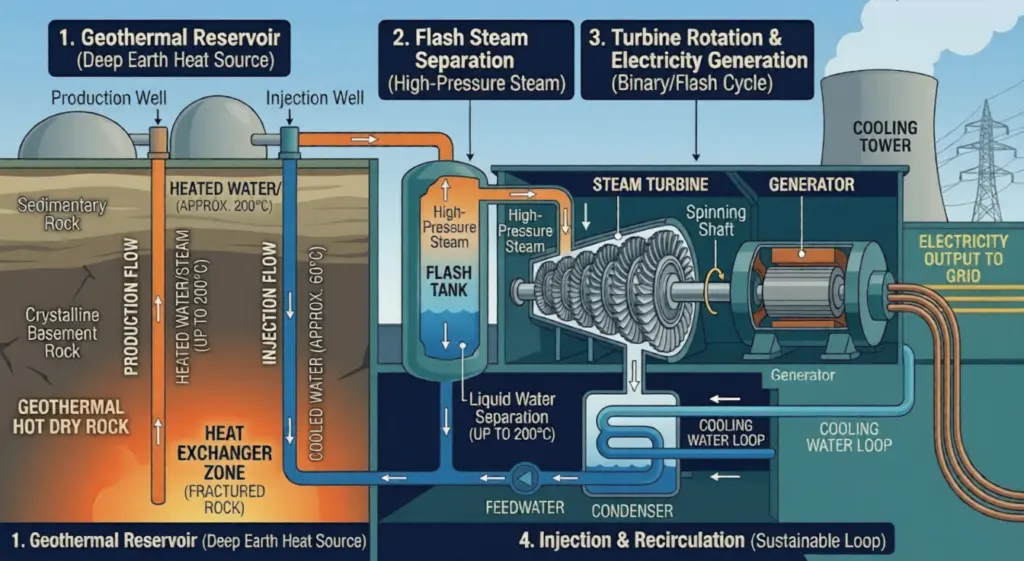
Geothermal electricity generation taps into the heat stored inside the Earth. In geothermally active regions, steam or hot water from underground reservoirs is piped to the surface, where it drives a turbine and generator.
The US is the world’s largest producer of geothermal electricity, mostly concentrated in California and Nevada. Geothermal plants run 24 hours a day regardless of weather, a major advantage over solar and wind. The limitation is location: this method only works where the Earth’s heat is close enough to the surface to be practical.
7. Fuel Cells
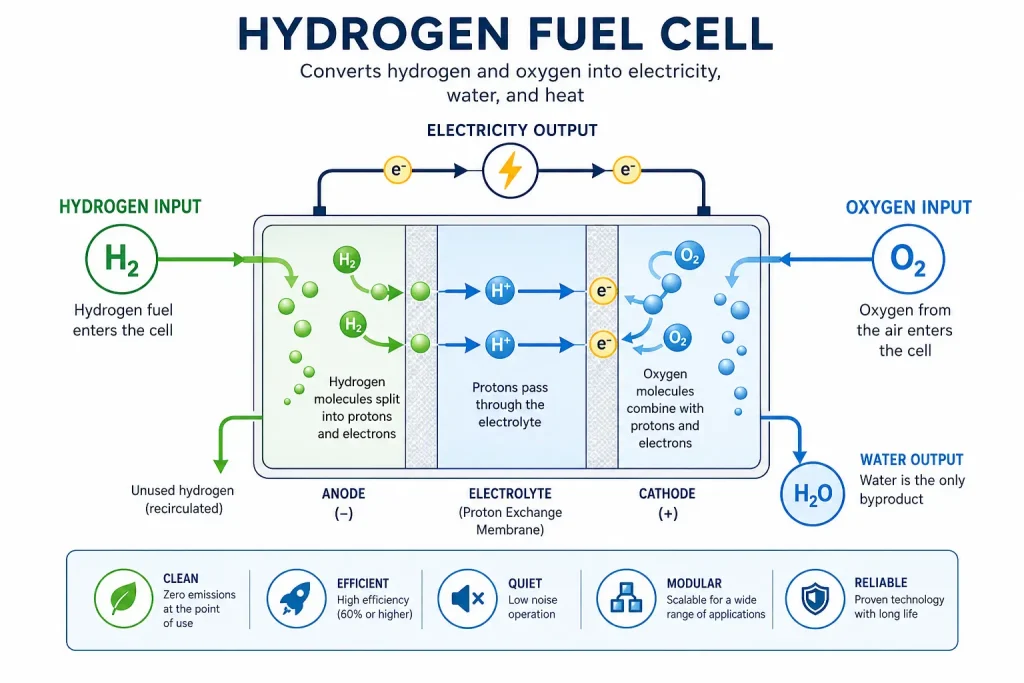
Fuel cells are one of the most interesting, different ways to generate electricity because they skip the turbine entirely, just like solar panels. A fuel cell combines hydrogen and oxygen in a controlled chemical reaction that directly produces electricity, water, and heat.
Fuel cells can achieve efficiencies of 60% or higher, compared to around 33–40% for a typical thermal power plant. They are used in spacecraft, buses, backup power systems, and increasingly in industrial applications. The main challenge is producing and storing hydrogen cheaply and safely.
8. Tidal and Ocean Energy
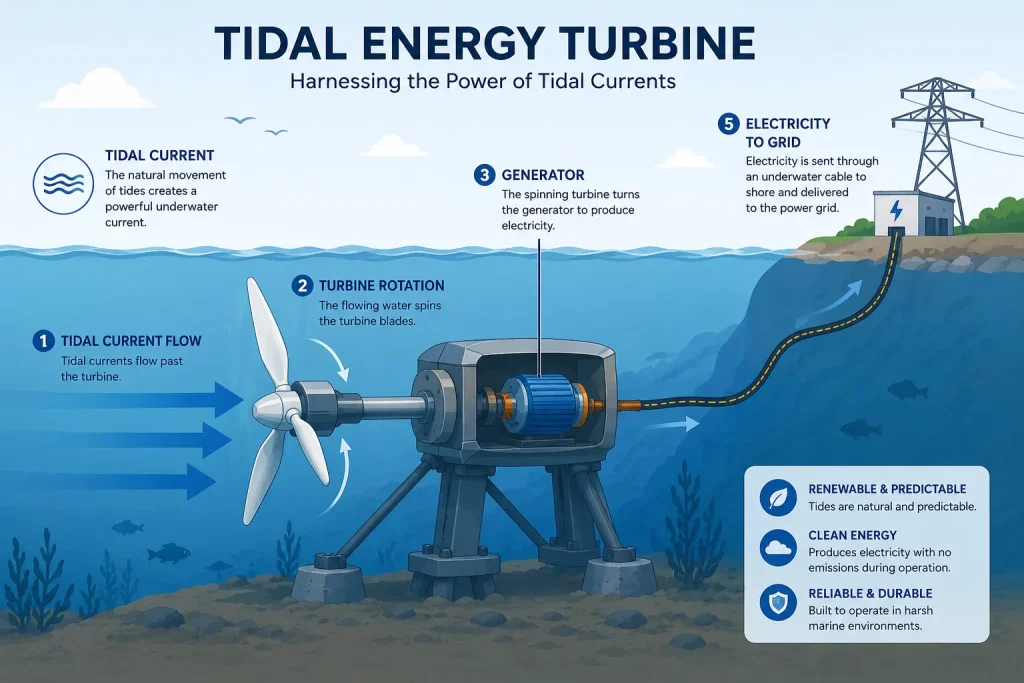
Tidal energy generation uses the predictable rise and fall of ocean tides to spin underwater turbines. As tidal currents flow in and out, they drive generators anchored to the seabed or built into tidal barrages.
Tidal power is one of the most predictable of all electricity generation technologies, tides follow lunar cycles that can be calculated centuries in advance. Ocean thermal energy conversion (OTEC) is a related method that exploits the temperature difference between warm surface water and cold deep water to generate power. Both are still in relatively early stages of large-scale deployment.
9. Biomass and Bioenergy
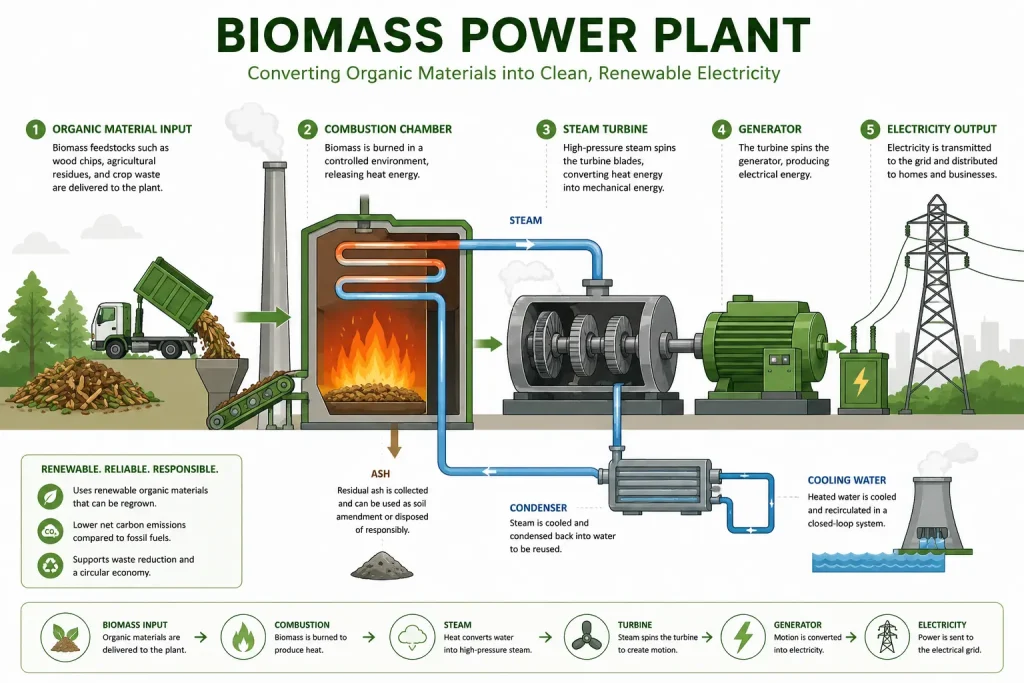
Biomass electricity generation burns organic material, wood, agricultural waste, dedicated energy crops, or landfill gas to produce heat, which drives a steam turbine. It is one of the oldest energy generation types, essentially a modern version of burning wood for heat.
Biomass accounts for about 1.3% of US electricity production. Because the carbon released during combustion was recently absorbed by the plants during growth, biomass is classified as renewable, though its net emissions depend heavily on what is burned and how it is managed. It is particularly useful for converting waste materials into generating power.
10. Piezoelectric and Thermoelectric Generation
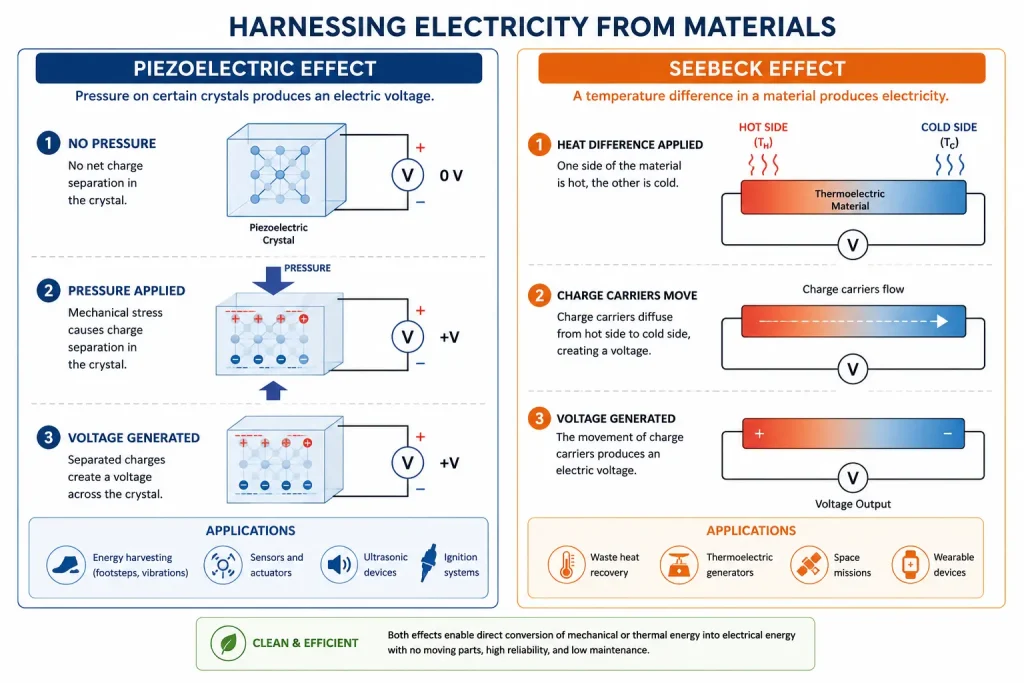
These are two of the most fascinating and least widely used electricity generation technologies available today.
Piezoelectric generation converts mechanical pressure or vibration directly into electricity. Certain crystals and ceramics produce a voltage when squeezed or bent. Research applications include harvesting energy from footsteps, road vibrations, and industrial machinery.
Thermoelectric generation converts a temperature difference directly into electricity using the Seebeck effect. Where one side of a thermoelectric module is hot and the other is cold, electrons flow and create current. These are used in deep-space probes (NASA’s Voyager spacecraft used them) and in waste-heat recovery systems in industry.
Both represent genuinely different ways to generate electricity without combustion, no turbine, and no photovoltaic effect.
Renewable vs. Non-Renewable Electricity Generation (Simple Comparison)
Not all electricity generation methods are equal when it comes to sustainability, cost, or reliability. Here is a side-by-side look at all 10 electricity production methods:
| Generation Method | Renewable | How It Works (Plain English) | Approx. US Electricity Share |
| Thermal (coal/gas/oil) | No | Burns fuel → steam → turbine → generator | ~60% (gas ~43%, coal ~16%) |
| Nuclear | No | Splits atoms → heat → steam → turbine | ~18% |
| Hydroelectric | Yes | Falling water → turbine → generator | ~6% |
| Wind | Yes | Moving air → turbine blades → generator | ~10% |
| Solar (PV) | Yes | Sunlight → electrons in semiconductor → current | ~4% |
| Geothermal | Yes | Earth’s heat → steam → turbine | ~0.4% |
| Fuel Cells | Yes (if green H₂) | Hydrogen + oxygen → chemical reaction → electricity | <1% |
| Tidal/Ocean | Yes | Tidal flow → underwater turbine → generator | <0.1% |
| Biomass | Yes (debated) | Burns organic material → steam → turbine | ~1.3% |
| Piezo/Thermoelectric | Yes | Pressure or heat difference → direct voltage | Negligible |
Nuclear fuel is finite but treated separately from fossil fuels due to its near-zero emissions profile.
Source: U.S. Energy Information Administration (EIA), 2023 data.
How to Generate Electricity at Home
There are four practical ways to generate electricity at home. Rooftop solar, small wind turbines, micro-hydro systems, and standby generators all work at a residential scale without a utility connection.
Rooftop solar is the most common of these ways to generate electricity at home because it scales down cleanly. A typical US home needs a 6–8 kW system to offset most of its usage, and the panels use the same photovoltaic effect covered above, just mounted on a roof instead of a solar farm.
Small wind turbines need consistent average wind speeds above 10 mph to be worth the investment, which rules them out for most suburban lots. Micro-hydro is the most site-restricted option since it only works if you own land with a reliable stream drop. Standby generators don’t generate anything renewable. They burn gas or diesel and exist purely as backup during outages. Whichever option you choose, sizing it correctly comes down to knowing your home’s electrical load first.
Which Method Generates the Most Electricity in the US?
Natural gas is the single largest source of electric power production in the United States, responsible for roughly 43% of total electricity generation in 2023. Coal, once dominant, has fallen to around 16% as plants retire and gas becomes cheaper.
On the renewable side, wind has overtaken hydropower to become the largest renewable electricity source in the US. Solar is the fastest-growing, with electricity output from utility-scale solar more than doubling between 2019 and 2023.
Nuclear, while not renewable, punches well above its weight: it uses only about 20% of electricity generation units (power plants) but delivers 18% of total electricity because nuclear plants run at near-full capacity almost continuously, unlike solar or wind.
The overall picture: fossil fuels still dominate, but the share of electricity production from clean sources is rising every year.
What Is the Easiest Way to Generate Electricity?
For most people, solar power is the easiest way to generate electricity at home. Rooftop solar panels require no moving parts, minimal maintenance, and straightforward installation through a certified installer. Once fitted, they generate electricity silently from daylight, not just direct sunlight.
If you’re in a rural or windy location, a small wind turbine is a viable alternative. For off-grid setups, a portable generator running on petrol or propane remains the simplest immediate solution.
In short: solar for most homes, wind for rural properties, and a portable generator for temporary or emergency needs.
What Is the Cheapest Way to Generate Electricity?
For most homes, the cheapest way to generate electricity up front is a standby generator, often costing $200-$500 for a basic portable unit. Rooftop solar costs more to install but becomes the cheapest option over time, since sunlight is free and the same solar panels covered above keep producing electricity for 25 years or longer.
Generators save money on day one but cost more to run. Gasoline and propane add up fast, so a household that relies on one regularly can spend more in a single year than a solar system’s entire installation would cost spread over its lifetime.
In short, a generator is the cheapest way to generate electricity right now, and solar is the cheapest way to generate electricity over the next decade.
What Is the Most Efficient Way to Generate Electricity?
Fuel cells are the most efficient way to generate electricity, converting chemical energy into electrical power at 60% efficiency Or even higher, which is approximately double the 33% to 40% efficiency of the typical thermal power plant described earlier in this guide.
Nuclear power is efficient in a different sense. It produces more energy per kilogram of fuel than any other method, even though the plant itself doesn’t convert that energy at a higher percentage than thermal plants do.
Solar and wind have zero fuel cost. But the conversion efficiency, how much of the sunlight or wind energy actually becomes usable electricity, is lower than fuel cells or nuclear. The most efficient way to generate electricity actually depends on whether you’re measuring energy conversion, fuel use, or cost.
The Future of Electricity Generation
The electricity generation systems of 2035 will look meaningfully different from today’s.
Offshore wind is scaling rapidly. Turbines placed in deeper water capture stronger, more consistent winds, and the US Atlantic coast is one of the richest offshore wind resources on the planet.
Small Modular Reactors (SMRs) are the most-watched development in nuclear electricity generation. These factory-built reactors are designed to be cheaper and faster to deploy than conventional nuclear plants. Several are under construction or in advanced permitting globally.
Green hydrogen produced by using renewable electricity to split water is emerging as a way to store and transport energy generation across seasons and geographies. Fuel cells running on green hydrogen could become a major electricity generation technology by the 2030s.
Grid-scale battery storage is the enabling technology for all of the above: it allows intermittent sources like solar and wind to supply power around the clock. The cost of battery storage has fallen over 90% since 2010 and continues to drop.
Creating energy cleanly, reliably, and at scale is the defining engineering challenge of this generation. The good news: the tools to do it already exist.
Frequently Asked Questions
What is the most common way to generate electricity?
Burning natural gas is the most common way to generate electricity in the United States, accounting for roughly 43% of total electricity production. Globally, coal remains the single largest source, though its share is declining as renewables grow.
What are the different ways to generate electricity?
The primary ways we generate electricity include thermal power (using coal, gas, or oil), nuclear power, hydroelectric power, wind power, solar photovoltaic, geothermal energy, fuel cells, tidal and ocean energy, biomass, and piezoelectric or thermoelectric generation. Most of these methods involve spinning a turbine linked to a generator, except for solar PV and fuel cells, which directly convert energy into electricity.
What is the cleanest way to generate electricity?
Wind and solar are generally considered the cleanest electricity generation technologies, producing near-zero emissions during operation. Hydroelectric is also very clean, though large dams can have ecological impacts. Nuclear produces almost no carbon emissions but generates radioactive waste.
What is the easiest way to generate electricity at home?
You can generate electricity at home, even without a grid connection, using rooftop solar panels, small wind turbines, micro-hydropower systems, or a standby generator. Solar is the most practical starting point for most homeowners.
What is the difference between electricity generation and electricity production?
“Electricity generation” and “electricity production” essentially refer to the same process and are often used interchangeably by organizations like the EIA. Both terms describe how different energy forms are transformed into electrical power at plants. While “generation” is more frequently used in technical discussions, “production” tends to appear more in economic contexts.
Research
Research for this article was supported by publications from the U.S. Energy Information Administration (EIA), U.S. Department of Energy (DOE), International Renewable Energy Agency (IRENA), and Ember’s Global Electricity Review 2025