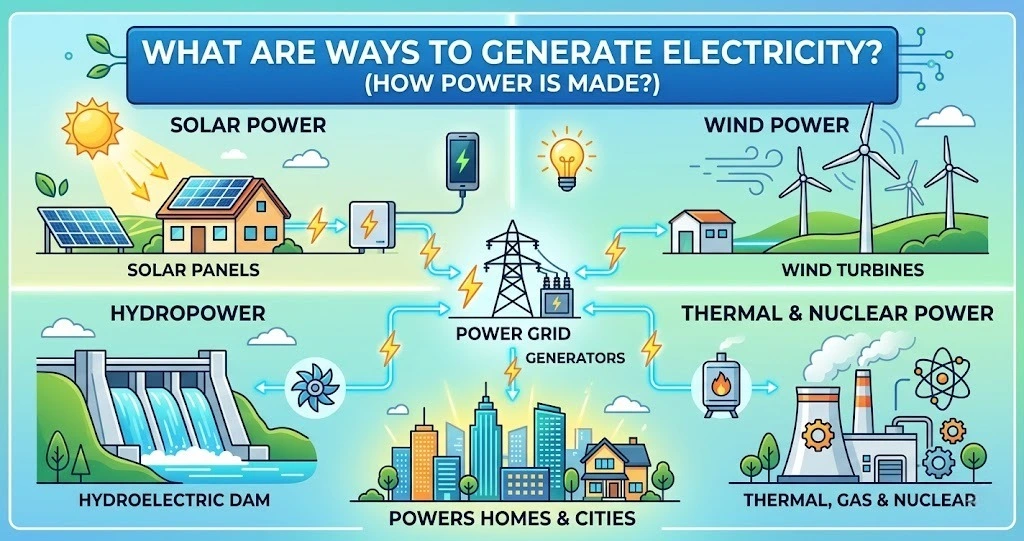
How a solar inverter works comes down to three jobs that run at the same time. It finds the best operating point for your panels, matches itself to the utility grid, and shuts down the moment that grid goes dark.
If you’re still deciding between inverter types, our guide on what a solar inverter is breaks down the differences. This article builds on the general DC to AC conversion process that every inverter relies on, going one layer deeper into the three mechanisms that make a solar inverter specifically tick.
Key Takeaways
- A solar inverter works in three simple steps: it tracks maximum power, syncs with the grid, and shuts down safely when needed.
- The MPPT in a solar inverter constantly adjusts to keep the panels producing near their peak output, even as light and temperature change.
- A grid-tied solar inverter must match the utility’s voltage, frequency, and phase before it connects, not after.
- Anti-islanding protection quickly turns off the inverter if the grid loses power, ensuring safety for utility workers.
- These three systems run together, not one after another, every second the inverter operates.
How MPPT Tracks Maximum Power
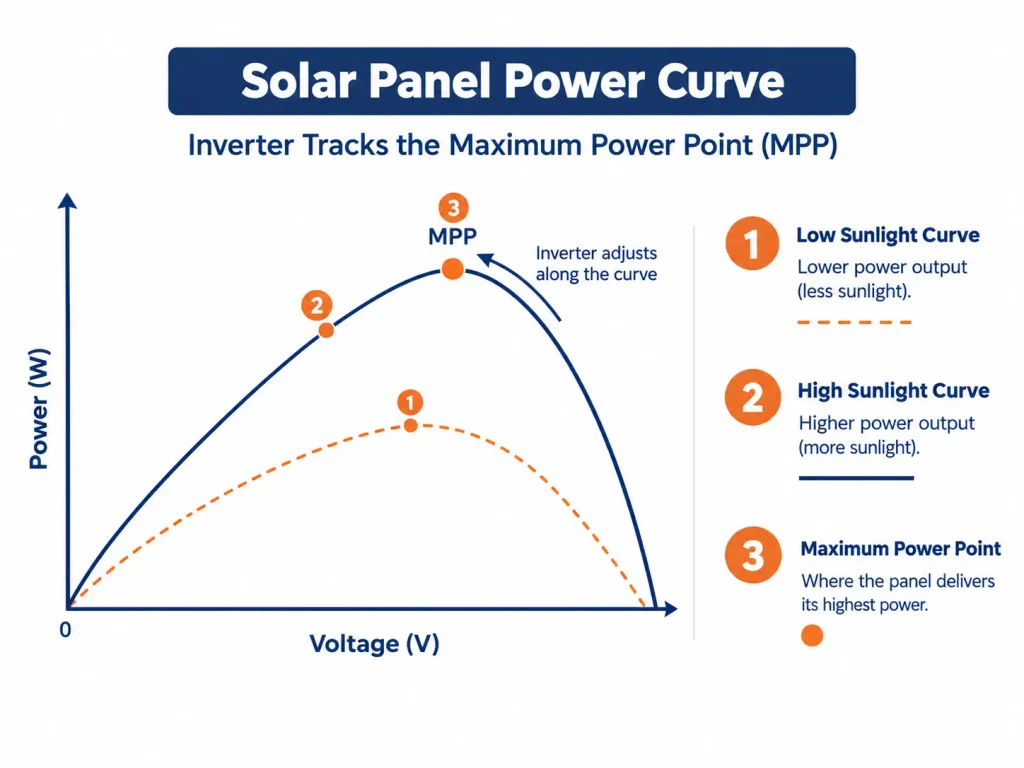
Understanding how a solar inverter works starts here, with one core problem. Panels do not output a fixed amount of power. Sunlight, temperature, and shading all shift where a panel’s peak output actually sits, and an MPPT solar inverter has to find that point in real time.
Why the Power Point Keeps Changing
The output of a solar panel follows a curve rather than a straight line. There is a trade-off between voltage and current, and the single point where their product is at its highest level is called the ‘maximum power point.’ This point keeps shifting continuously because the intensity of sunlight and the panel temperature change throughout the day.
How the Inverter Finds It
Most inverters use a method called perturb and observe. The inverter nudges the panel’s operating voltage slightly, checks whether power output went up or down, then nudges again in whichever direction helped. Testing under the IEC 62891 measurement standard has recorded static tracking efficiencies near 99 percent in well-tuned systems.
This constant adjustment matters most on cloudy or hazy days, when light levels change from one minute to the next. A fixed-voltage inverter would waste a meaningful share of available power in those conditions, while an MPPT-based system keeps recalculating the optimal point many times per second.
Larger arrays often split panels across more than one string, especially when some face a different angle or catch partial shade. This setup is common in string inverters, which handle several panels through one shared conversion unit. An inverter with multiple MPPT inputs tracks each string’s own power point independently, so one shaded string does not drag down output from a string in full sun.
How Grid Synchronization Works?
A grid-connected solar inverter cannot simply be plugged into the grid. First, its power must exactly match the grid power. If it doesn’t, it can damage equipment and trip the breakers. That’s why the inverter does this check by itself, every single time.
What Do Voltage, Frequency, and Phase Mean?
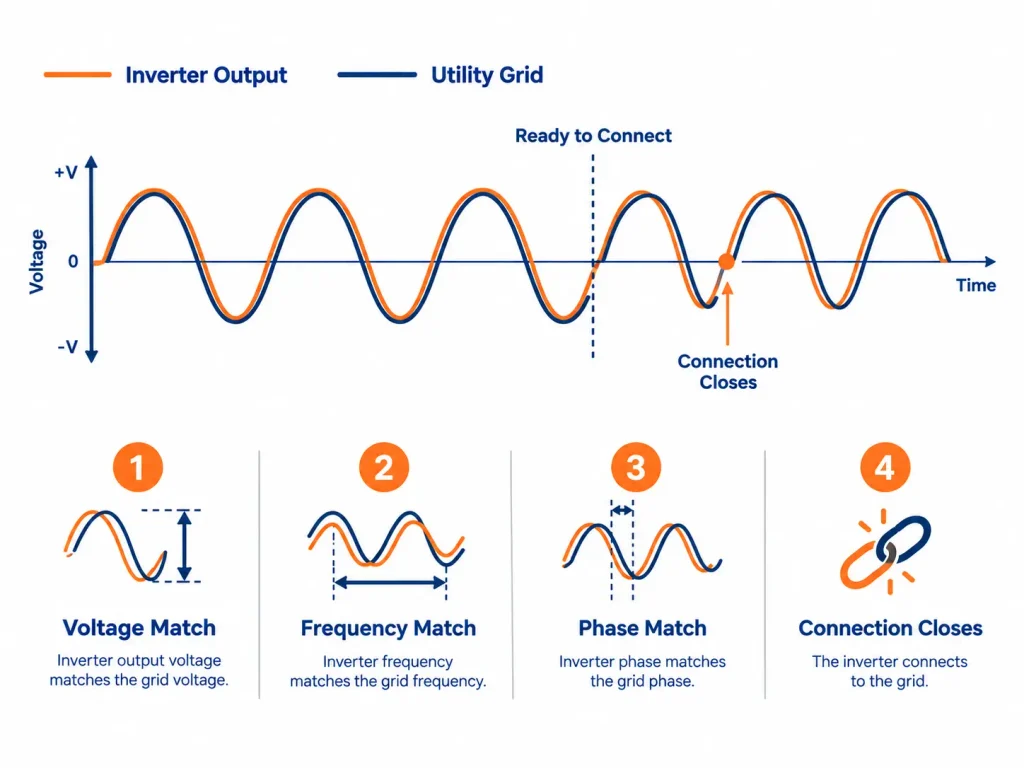
Three things need to line up before the inverter connects: voltage, frequency, and phase. In the United States, that means matching the grid’s standard 60 Hz frequency and its nominal voltage closely, with the inverter’s waveform rising and falling in step with the grid’s own waveform.
The Connection Sequence (Step by Step)
The inverter first generates its own AC waveform internally, then compares i t against the grid’s live signal using a control loop. It continuously adjusts its output until the two waveforms align within an acceptable margin. Only then does it close the connection, the defining behavior of any grid tie solar inverter.
This synchronization is also what makes net metering possible. Once the inverter’s output is locked to the grid, any surplus power beyond what the home is using flows outward automatically, and the utility meter tracks that exported energy the same way it tracks what the home pulls in.
If the grid’s voltage or frequency drifts outside the inverter’s allowed range, even briefly, the inverter pauses rather than forcing a mismatched connection. This same monitoring loop is also the foundation for the safety behavior covered next.
How Does Anti-Islanding Protection Work?
Anti islanding protection exists for one reason: keeping utility line workers safe. Without it, a solar system could keep energizing a downed power line during an outage, long after the utility assumes the line is dead.
How Does Passive Anti-Islanding Detection Work?
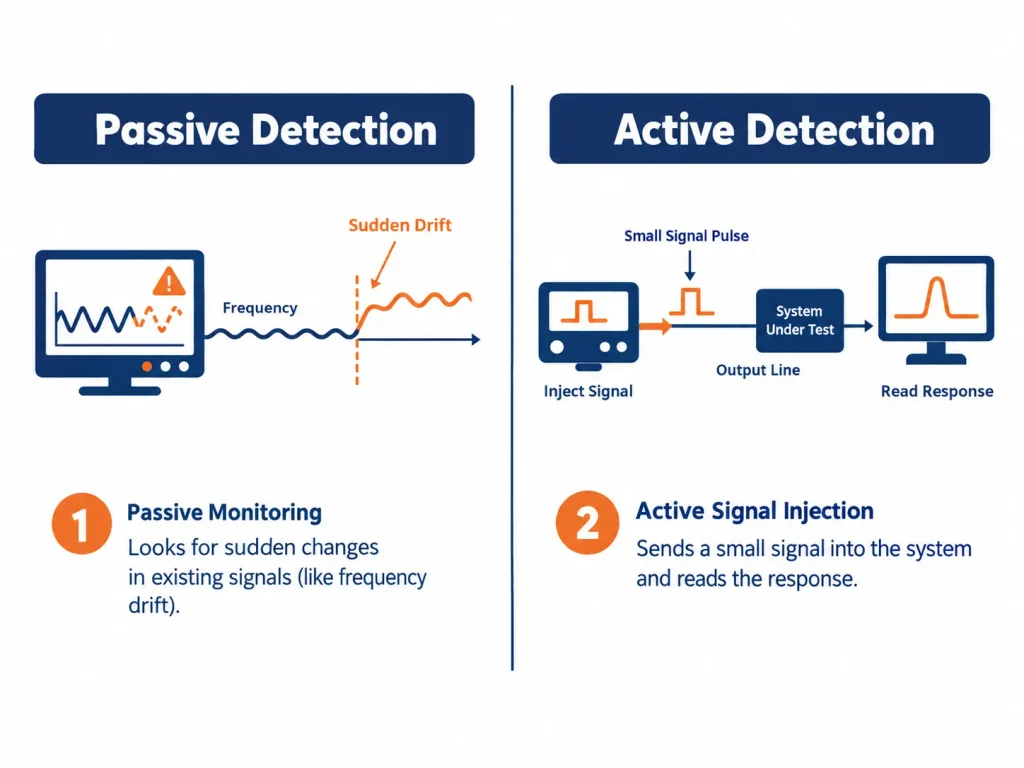
Passive detection watches the grid’s own electrical signature. The inverter keeps checking the grid’s voltage and frequency. It also watches how fast the frequency changes, which is called ROCOF. If these numbers jump outside the normal range, the inverter knows the grid is probably gone.
How an Active Anti-Islanding Detection Works
Active detection is like knocking on a wall to check if it’s solid. The inverter sends out a tiny signal on purpose. A working grid is so big that it absorbs this signal, so nothing changes. When the grid is gone, nothing absorbs it, so the voltage or frequency moves a little. The inverter notices this right away.
Why Anti-Islanding Protection Matters for Safety
Power lines can hurt people, even when the power is out. That’s why the US has a rule called IEEE 1547-2018. It says a solar inverter must stop sending power within two seconds after the grid goes down. Before an inverter goes on sale, it is tested under UL 1741 to make sure it follows that rule.
So when a blackout hits, your solar system shuts off too, even if the sun is shining. It does this on purpose, to keep line workers safe. If you want power during a blackout, you need a hybrid inverter with a battery.
Passive vs. Active Detection at a Glance
| Detection Method | How It Works | Trade-off |
| Passive | Monitors voltage and frequency drift (ROCOF) | Fast, but can miss certain balanced-load conditions |
| Active | Injects a small disturbance and reads the response | Slightly slower, but catches cases passive methods miss |
Most modern inverters combine both methods, using passive monitoring as the first check and active injection to confirm borderline cases, consistent with standard UL 1741 testing practice.
Frequently Asked Questions
What happens to a solar inverter during a power outage?
It shuts off right away. By law, it must stop sending power within two seconds of losing the grid, so repair crews working on the lines stay safe.
Can a solar inverter work without a battery?
Yes. A grid-tied inverter uses the power grid itself as its reference instead of a battery. This is why most home solar systems don’t need one to work.
Does the solar inverter shut down at night?
Yes. When the sunset starts, the panels stop producing much power. The inverter shuts down automatically by morning.
How does a solar inverter work step by step?
Panels generate DC electricity. The inverter finds the maximum power point, then converts the DC to AC, synchronizing to the grid voltage and frequency, and then exports or supplies power to the home.
Conclusion
A solar inverter never performs just one function. It converts DC to AC, continuously hunts for each panel’s maximum power point, matches its output to the grid, and stands ready to disconnect the instant the grid goes down. These three systems, MPPT, grid synchronization, and anti-islanding protection, run together every second, not in sequence, turning raw DC power into a safe, grid-synced AC supply.
Research
MPPT efficiency figures follow IEC 62891 testing standards. Anti-islanding requirements follow IEEE Standard 1547-2018, detailed in NREL’s technical primer and the DOE grid services overview.