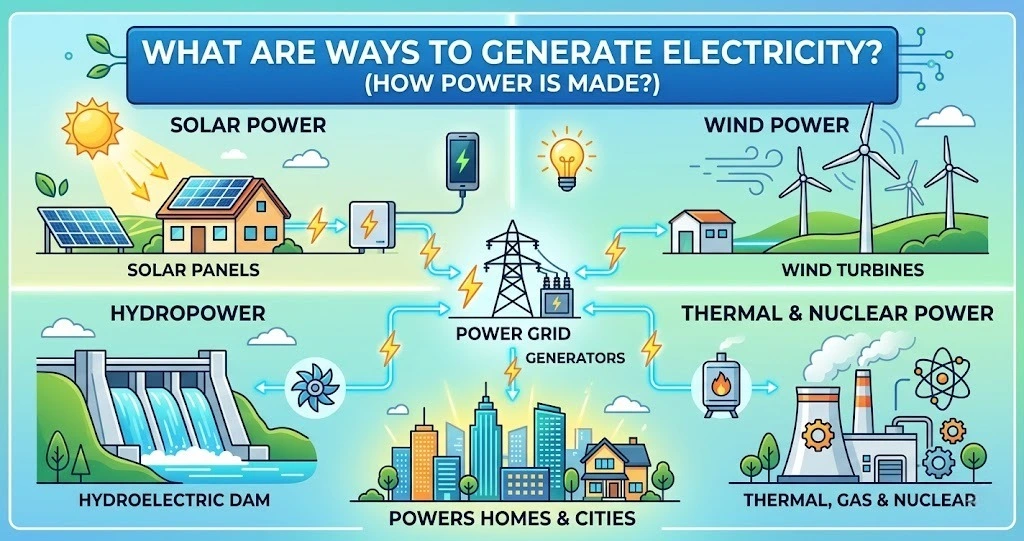
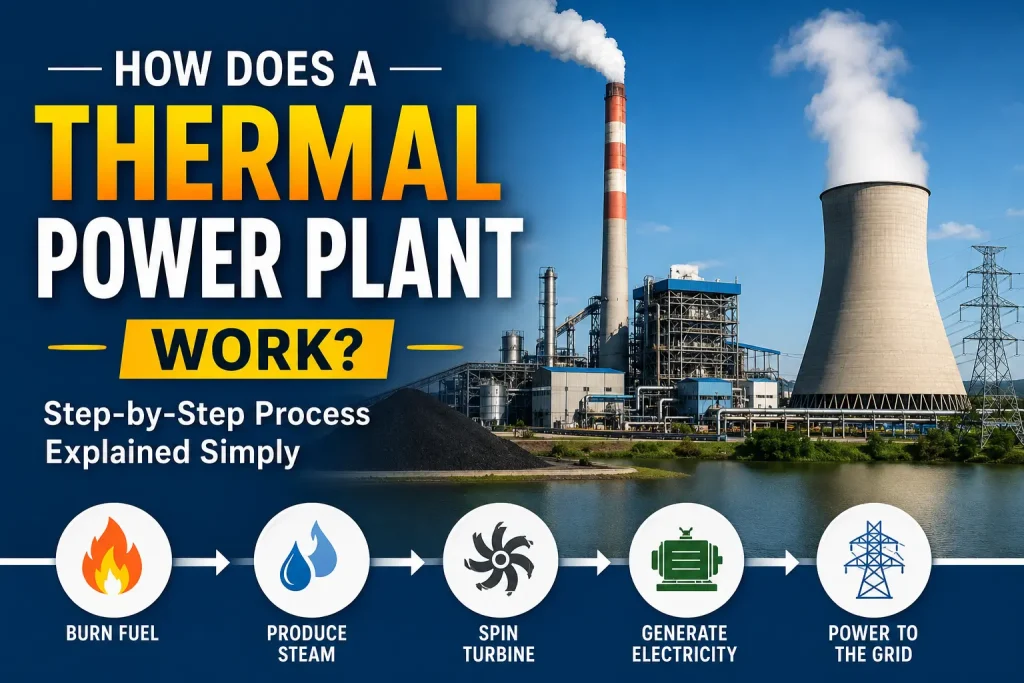
In the 21st century, power generation has become one of the most vital aspects of modern civilization. From fueling industries to lighting up homes, energy is the backbone of everything we do. But the ways we generate this power are incredibly diverse, ranging from ancient methods to cutting-edge innovations. In this article, we’ll take a human, detailed look into the different methods of generating electricity across the world, touching on every major energy sector and where the future might be heading.
1. Fossil Fuel-Based Power Generation
Fossil fuels, coal, oil, and natural gas, have powered the modern world for more than a century. While they’ve been essential to industrial growth, they come with heavy environmental costs.
a) Coal Power Plants
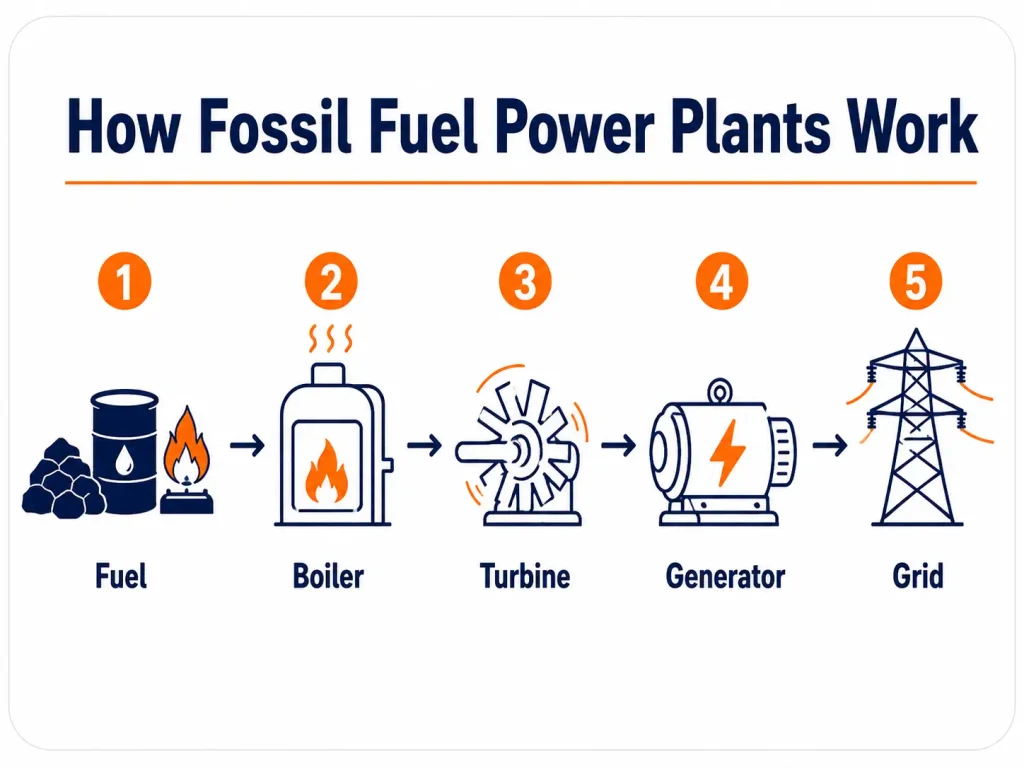
Coal-fired plants work by burning coal to heat water, creating steam that spins turbines. Despite being the oldest large-scale method of power generation, coal is one of the dirtiest energy sources, responsible for high levels of carbon dioxide, sulfur dioxide, and particulate emissions.
b) Natural Gas Power
Natural gas plants are more efficient and emit roughly half the carbon dioxide of coal plants. In combined-cycle plants, gas turbines generate electricity, and the excess heat is used to produce steam for additional power.
c) Oil-Fueled Plants
While less common today due to cost and emissions, oil is still used in regions with abundant supplies or limited alternatives.
Oil-fired plants rely on diesel or residual fuel oil to generate steam or run gas turbines directly. Global electricity from oil has fallen below 3% as natural gas and renewables have become cheaper alternatives. It remains a backup option in remote areas and island grids where fuel delivery is more practical than building transmission lines.
2. Renewable Energy Sources
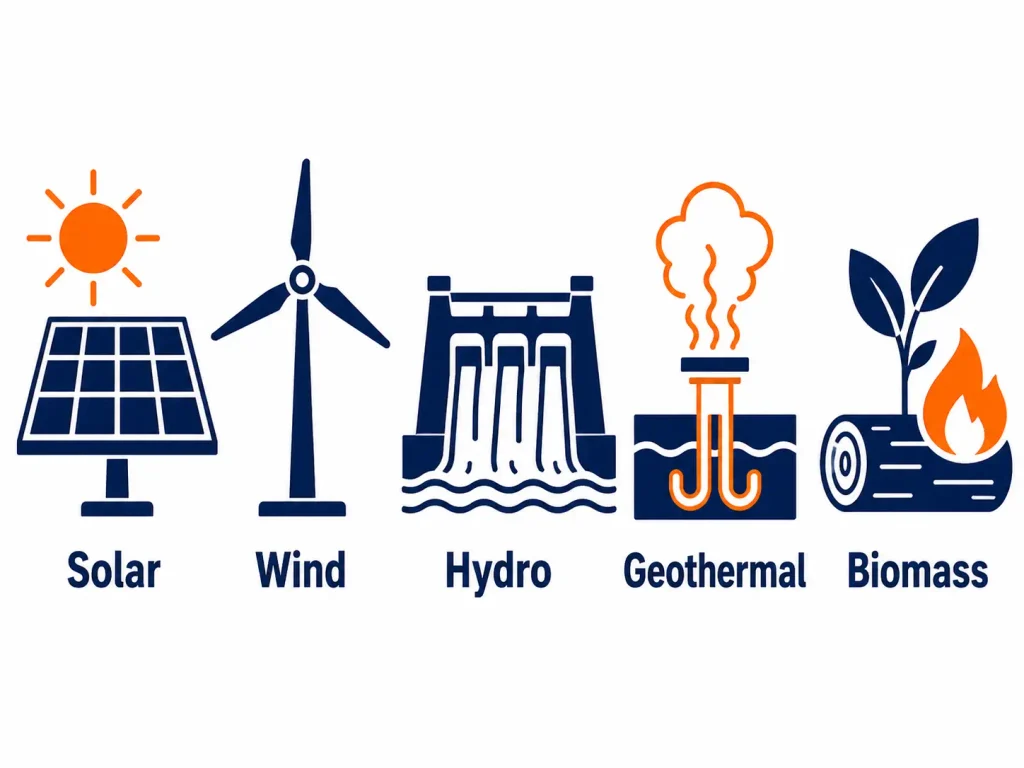
The world is undergoing a massive shift towards renewable energy that is clean, abundant, and increasingly affordable.
a) Solar Energy
Solar panels, or photovoltaic (PV) cells, convert sunlight directly into electricity. Large-scale solar farms and rooftop installations are becoming a common sight worldwide.
Solar is now the fastest-growing electricity source in the world, with global capacity doubling roughly every three years since 2016. As of 2024, solar PV accounts for about 4% of US electricity, but that share is growing by double digits every year. It’s the easiest way for households to generate power, as rooftop systems can significantly reduce electricity bills.
b) Wind Energy
Wind turbines capture the kinetic energy of the wind and convert it into power. Offshore wind farms, in particular, are booming due to stronger, more consistent winds.
Wind is now the largest source of renewable electricity in the United States, generating around 10% of total national power. A modern wind turbine has a lifespan of 20 to 25 years and produces electricity with near-zero emissions during operation. Offshore wind is expanding rapidly because winds over open water are stronger and more consistent than on land.
c) Hydropower
Hydropower is the world’s largest renewable electricity source, supplying around 14% of global power generation according to IEA 2024 data. Dams store water in reservoirs and release it through turbines when electricity demand rises, making hydro one of the few renewable sources that can respond to grid needs on demand. However, building large dams requires significant land, capital, and the right river geography, which limits where it can be deployed.
d) Geothermal Energy
By tapping into the Earth’s internal heat, geothermal plants provide a reliable, low-emission energy source.
The United States is the world’s largest geothermal electricity producer, with most plants in California and Nevada. These plants run 24 hours a day regardless of weather, unlike solar and wind. The problem is that geothermal only works where underground heat is close enough to the surface to be reached economically.
e) Biomass Energy
Biomass involves burning organic material, wood, agricultural waste, or specially grown energy crops to generate electricity. It’s renewable, but not entirely carbon-neutral depending on sourcing and use.
Biomass accounts for about 1.3% of US electricity production and is particularly useful for converting agricultural and forestry waste into usable power. Unlike solar and wind, it can generate electricity on demand, making it a reliable option for baseload power. However, its actual carbon impact depends heavily on what is burned and how the fuel is sourced and managed.
3. Nuclear Power: Splitting Atoms for Electricity
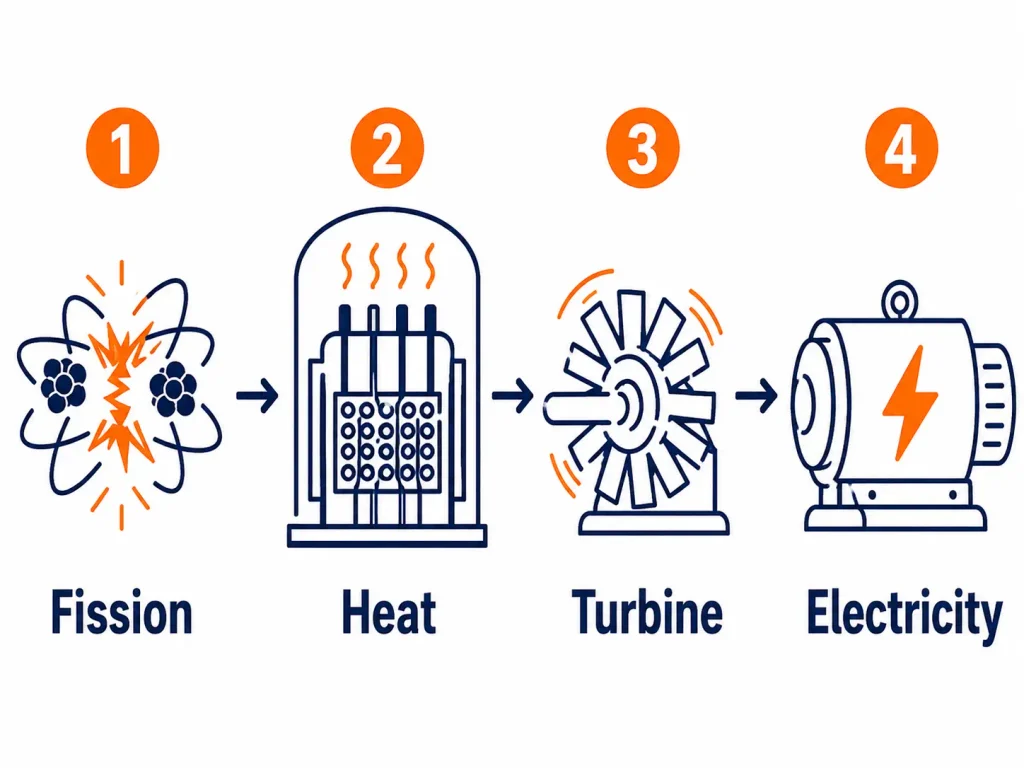
Nuclear power is a low-carbon method of producing electricity using the energy released from splitting atoms (nuclear fission). Despite its efficiency, nuclear energy remains controversial due to radioactive waste and accident risks.
Among all types of power generation, nuclear delivers about 18% of US electricity with near-zero carbon emissions during operation. A single uranium fuel pellet holds as much energy as roughly 17,000 cubic feet of natural gas. The IEA reported that global nuclear electricity generation hit a new record in 2025 as several countries expanded their reactor fleets.
Emerging and Alternative Energy Technologies
Innovation is constantly reshaping how we generate power. Some newer or less widespread methods could play major roles in the future.
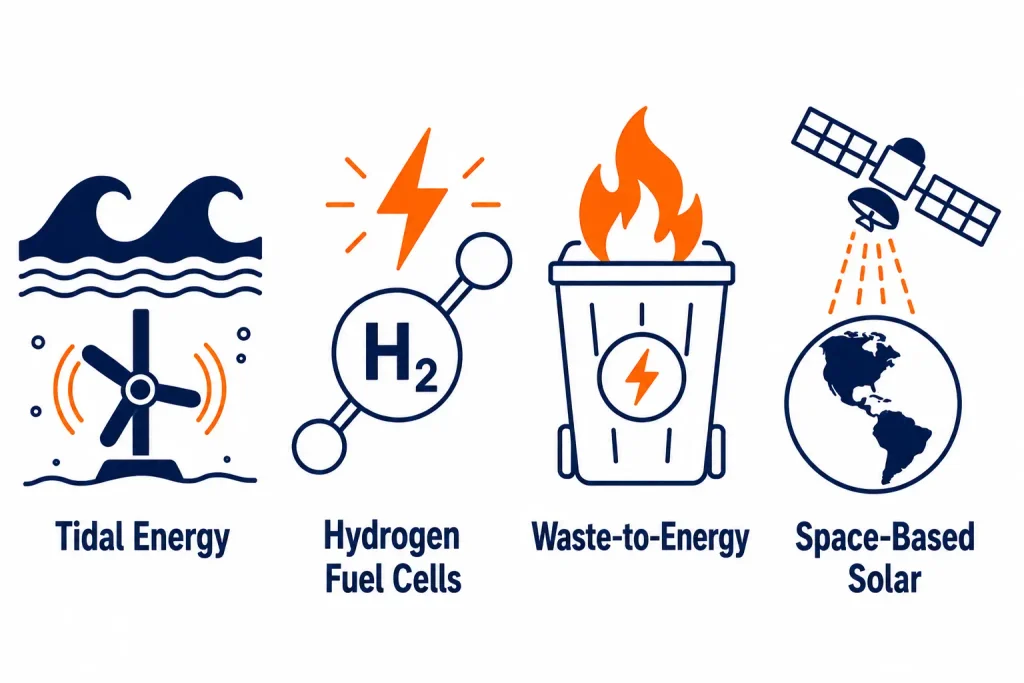
Tidal and Wave Energy
Harnessing the consistent motion of tides and waves, this type of energy is still in the early stages but offers predictable, renewable energy.
The La Rance tidal barrage in France, operational since 1966, is one of the oldest and largest tidal power stations in the world with a capacity of 240 MW. Unlike other types of power generation that depend on weather, tidal energy follows predictable lunar cycles that can be calculated years in advance. Large-scale deployment remains limited due to high construction costs and the need for specific coastal geography.
Hydrogen Fuel Cells
Hydrogen can be split from water using electrolysis powered by renewable energy, creating a clean fuel that only emits water vapor when used.
Fuel cells achieve efficiencies of 60% or higher, compared to around 33 to 40% for a typical thermal power generation plant. They are currently used in hydrogen-powered buses, spacecraft, backup power systems, and industrial facilities. The main challenge is producing and storing hydrogen cheaply enough to compete with other electricity generation methods at scale.
Waste-to-Energy
Modern facilities burn municipal waste to generate electricity and heat, reducing landfill needs while creating energy.
The United States operates over 70 waste-to-energy facilities that process more than 90,000 tons of municipal solid waste daily. Every ton of waste burned avoids roughly one ton of landfill methane, a greenhouse gas far more potent than carbon dioxide. It plays a practical role in countries with limited land for landfills.
Space-Based Solar Power
A futuristic concept where giant solar panels orbit Earth and beam power down. While still experimental, it could someday offer an unlimited supply of clean energy.
Hybrid Power Systems: The Best of Both Worlds
Hybrid power generation systems combine two or more energy sources to improve reliability and reduce costs. A common example is pairing solar panels with battery storage and a diesel generator. Solar handles the daytime load, batteries cover evening demand, and the generator acts as backup. Grid operators increasingly pair wind and solar together because their peak output periods complement each other across seasons.
Conclusion: The Future of Power is Diverse
As global energy demand continues to rise, diversifying our methods of power generation is critical. From fossil fuels and nuclear to renewable and innovative alternatives, each method has a role to play in balancing the world’s growing needs with the urgent demand for sustainability.
Frequently Asked Questions
What are the main types of power generation?
Fossil Fuels (coal, natural gas, oil) Nuclear Renewables (solar, wind, hydro, geothermal, biomass) Emerging types include tidal energy, hydrogen fuel cells, and waste-to-energy systems.
Which type of power generation produces the most electricity in the US?
Natural gas is the largest source at around 43% of US electricity. Wind leads renewables at 11%, followed by nuclear at 18%, according to EIA 2025 data.
What is the cheapest type of power generation?
Solar and wind are now the cheapest sources of new electricity generation in most countries. Utility-scale solar costs have fallen over 90% since 2010.
Which type of power generation has the lowest carbon emissions?
Wind has the lowest life cycle carbon emissions of any generation type. Nuclear and solar follow closely behind.
Is nuclear power considered renewable?
No. Nuclear fuel (uranium) is finite, so it is classified as non-renewable. However, it produces near-zero carbon emissions during operation.
Research
Research for this article was drawn from publications by the U.S. Energy Information Administration (Electricity Explained), the International Energy Agency (Global Energy Review), and the International Renewable Energy Agency (IRENA Publications).