There are 4 main types of solar panels. The monocrystalline, the polycrystalline, the thin film and the bifacial. Three of these have been around for decades. The fourth option is a new addition to the roof, and it is already changing how installers think about performance.
Have you ever compared solar panel quotes and wondered why the price of one panel is double that of another? The type of solar panel is usually the reason. Efficiency, cost, and lifespan all trace back to which of these four types you’re looking at.
This article breaks down each type in plain language and relies on data from the U.S. Department of Energy and the Energy Information Administration, not marketing copy.
Key Takeaways
- There are 4 main types of solar panels: monocrystalline, polycrystalline, thin-film, and bifacial.
- Monocrystalline panels lead on efficiency and lifespan but cost more upfront.
- Polycrystalline panels trade a little efficiency for a lower price tag.
- Thin-film panels are the lightest and most flexible, built for portable or unconventional setups.
- Bifacial panels are the newest type, capturing sunlight from both sides of the panel.
What Are the Main Types of Solar Panels?
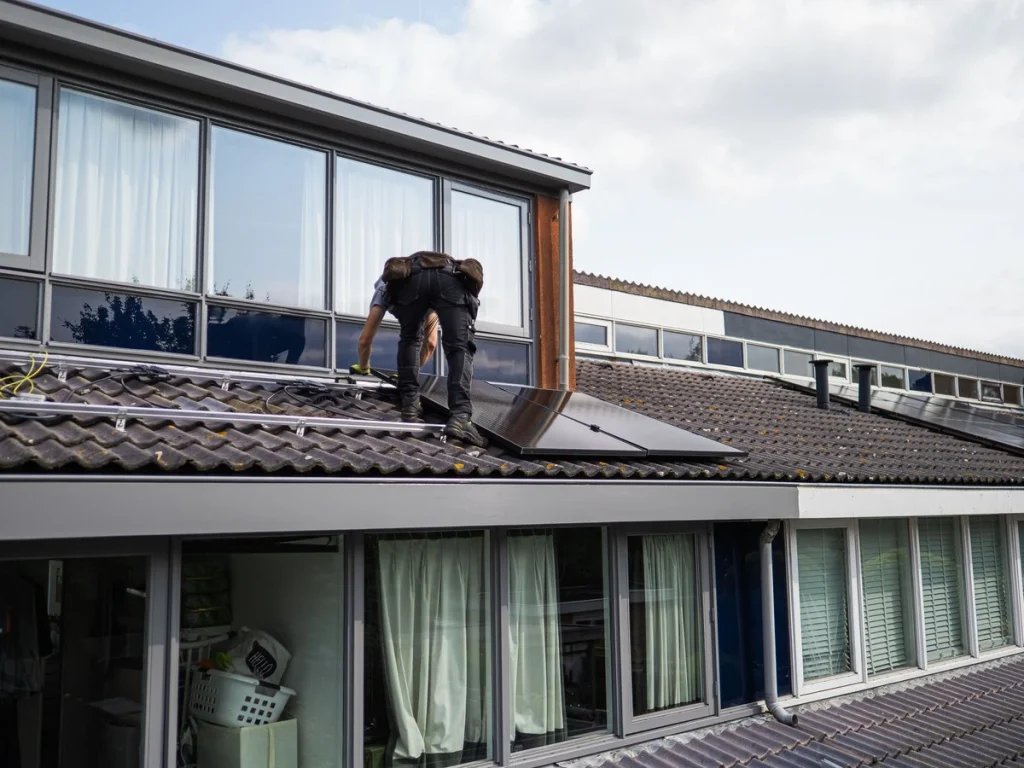
Every solar panel converts sunlight into electricity using the photovoltaic effect. A single photovoltaic device is called a cell, and cells are connected together in chains to form the larger units known as modules or panels. What changes between types of solar panels is the material and structure of those cells.
Three of the four types use crystalline silicon. The fourth, thin-film, skips silicon wafers entirely. Bifacial panels aren’t a separate material at all. They’re a small design change, usually built on monocrystalline cells, that lets the panel work from both sides.
Understanding these types of solar panel technology inside and out is the difference between picking a panel because it was on sale and picking one that actually fits your roof.
A comparison of all of them is presented here.
1. Monocrystalline Solar Panels
Monocrystalline panels are made by cutting from a single, continuous crystal of silicon. This uniform structure provides a clear path for electrons to move, which is why these panels rank at the top in terms of efficiency.
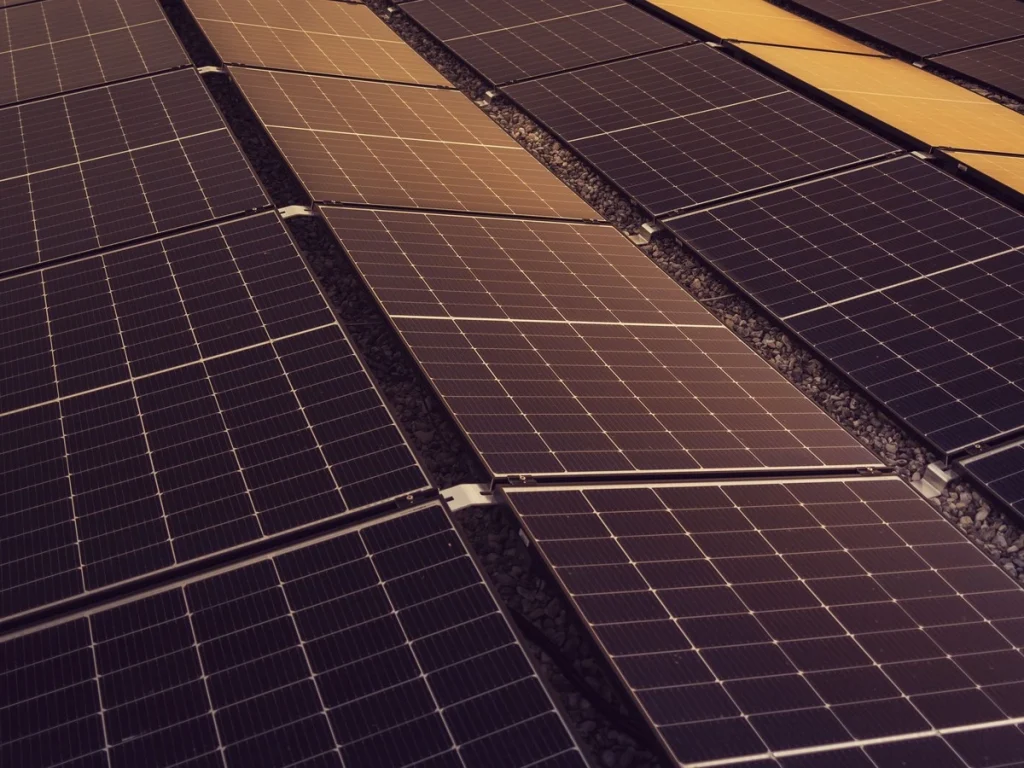
The Department of Energy notes that monocrystalline panels are more efficient because electrons move more freely to generate electricity, though polycrystalline cells are less expensive to manufacture. In practice, commercial monocrystalline panels typically run 20% to 22% efficiency, with premium models pushing higher.
They are solid black in color, with rounded edges on the cells and you will recognize them. They also last longer than anything else, and a lot of manufacturers will give you a 25-year warranty.
It is best for homeowners with limited roof space who want maximum output per square foot.
The downside is the highest price tag of the three traditional types of solar panels.
2. Polycrystalline Solar Panels
Polycrystalline panels are made by melting multiple silicon fragments together, rather than growing one pure crystal. That process is cheaper and faster, but it leaves grain boundaries inside the cell that slow electron flow slightly.
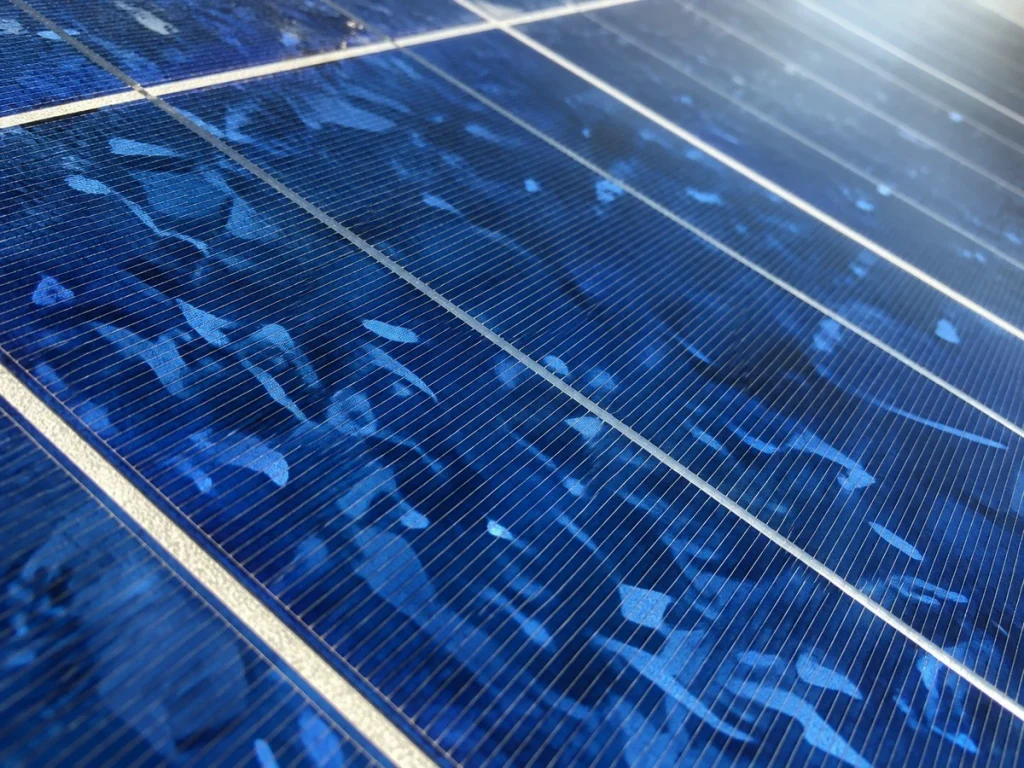
The result is a panel that typically runs at 15% to 17% efficiency. Lower than monocrystalline, but not by a dramatic margin, and the price difference usually makes up for it.
You can spot polycrystalline panels by their blue, speckled look. Monocrystalline panels look like solid black glass, while polycrystalline panels look more like a starry night sky.
Cost is where polycrystalline panels earn their keep. Because the manufacturing process uses silicon fragments instead of a single high-purity crystal, less material goes to waste, and that savings gets passed on at checkout. For large, unshaded roofs where space isn’t the limiting factor, this type of solar panel often delivers the best cost-per-watt on the market.
It is best for the budget-conscious installations with enough roof space to make up for the efficiency gap.
The downside is it’s slightly more sensitive to heat, which can nudge output down further on hot days.
3. Thin-Film Solar Panels
Thin-film panels ditch silicon wafers altogether. Instead, a thin layer of photovoltaic material, sometimes just a few micrometers thick, is deposited onto a backing like glass, metal, or flexible plastic.
That’s what makes thin-film panels bendable. You’ll find them on RVs, boats, and camping gear where weight and flexibility matter more than squeezing out every last watt. Perovskite cells, one of the newer thin-film materials, improved from around 3% lab efficiency in 2009 to over 25% by 2020, though commercially available thin-film panels today still generally sit in the 10% to 13% range.
It is best for the portable setups, curved surfaces, and situations where flexibility beats raw efficiency.
The downside is that you’ll need significantly more panel area to generate the same power as crystalline types.
4. Bifacial Solar Panels (The Emerging Type)
Here’s where things get interesting. Bifacial panels don’t introduce a new cell material. They’re usually built on monocrystalline cells, but with a transparent back sheet instead of an opaque one.
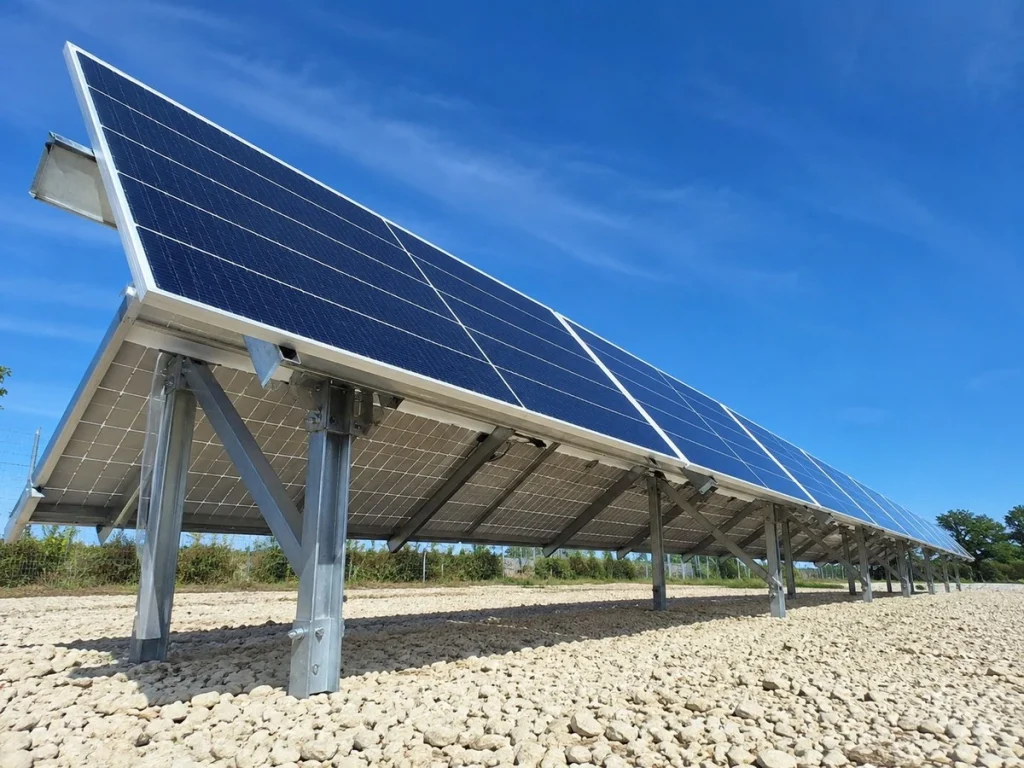
That transparent back lets the panel capture sunlight that reflects off the ground, a light-colored roof, or nearby surfaces, not just direct sunlight hitting the front. The Department of Energy describes bifacial cells as double-sided, designed to capture light on both sides of the module by picking up light reflected off the ground or roof surface where the panels are installed.
It sounds like a free lunch, and in the right setup, it nearly is. Install bifacial panels over white gravel or a reflective rooftop, and you can pick up a real efficiency bonus. Install them over dark shingles, and that bonus mostly disappears.
Even the Department of Energy admits the jury is still out on exactly how much bifacial design improves real-world system performance, since results depend heavily on installation surface and angle. That honesty is refreshing in an industry that loves a big number on a spec sheet.
It is best for the ground-mounted or elevated systems over reflective surfaces, like solar carports or gravel lots.
The downside is the reflective advantage shrinks or vanishes on standard rooftop installs, so the price premium isn’t always worth it at home.
Types of Solar Panels Compared
Reading specs one type at a time only gets you so far. A side-by-side solar panel types comparison makes the differences easier to weigh in one glance, especially if you’re comparing options for a real installation.
| Type | Typical Efficiency | Relative Cost | Typical Lifespan | Best Use Case |
| Monocrystalline | 20–22% | Highest | 25–30+ years | Limited roof space, max output |
| Polycrystalline | 15–17% | Lower | 25–30 years | Budget installs, ample roof space |
| Thin-film | 10–13% | Lowest per panel | 10–20 years | Portable, flexible, lightweight needs |
| Bifacial | Varies by surface | High | 25–30+ years | Ground mounts over reflective surfaces |
Ranges reflect typical commercially available panels and can vary by manufacturer and model year.
Actual example:
You need 400W of output. A 21% efficient monocrystalline panel will take up ~19 sq ft of roof space. That same 400 W from a 16% efficient polycrystalline panel would require about 25 sq ft, or about 30% more roof real estate for the same output. That’s the real cost of opting for the cheaper panel type in a tight roof space.
Which Type of Solar Panel Is Best for You?
There isn’t one best type of solar panel for every situation, and anyone who tells you otherwise is selling something. The right choice depends on three questions: how much roof space you have, what your budget looks like, and where the panels will actually sit.
Small roof, real budget to spend?
Monocrystalline earns its price tag.
Plenty of space and a tighter budget?
Polycrystalline closes most of the performance gap for less money.
Need something that bends around a curved surface or straps to a backpack?
Thin film is really your only option.
Installing a ground-mounted system over a reflective surface?
That’s where bifacial panels get to show off.
Frequently Asked Questions
How many types of solar panels are there?
There are 4 main types: monocrystalline, polycrystalline, thin-film, and bifacial. The first three have been standard for decades; bifacial is the newer design gaining ground on commercial and ground-mounted installs.
Do solar panel types affect warranty length?
Yes. Monocrystalline and bifacial panels typically carry 25-year warranties, matching their longer expected lifespan. Thin film usually lasts just 10-20 years, in line with its shorter service life.
Can you mix panel types on the same roof?
Technically yes, but installers avoid doing this. Mismatched panels wired in the same string drag the entire system’s output down to the level of the weakest panel, so most stick to a single type per string.
What is the best type of solar panel?
Monocrystalline wins on all-around efficiency and lifespan for a standard rooftop install. Bifacial can outperform it, but only in ground-mounted setups over reflective surfaces where the advantage actually applies.
Conclusion
Four types of solar panels, four different strengths: monocrystalline wins on efficiency, polycrystalline wins on price, thin-film wins on flexibility, and bifacial wins when installed in the right location with the appropriate underlying surface. None of these is the best choice for everyone. The best type of solar panel is the one that perfectly suits your roof, your budget, and your goals.
If you’re still deciding how solar panels generate electricity in the first place, understanding that first will make comparing types easier.
Research
Research for this article was supported by publications from the U.S. Department of Energy’s Solar Energy Technologies Office (DOE), including its PV Cells 101 primer, and the U.S. Energy Information Administration (EIA).