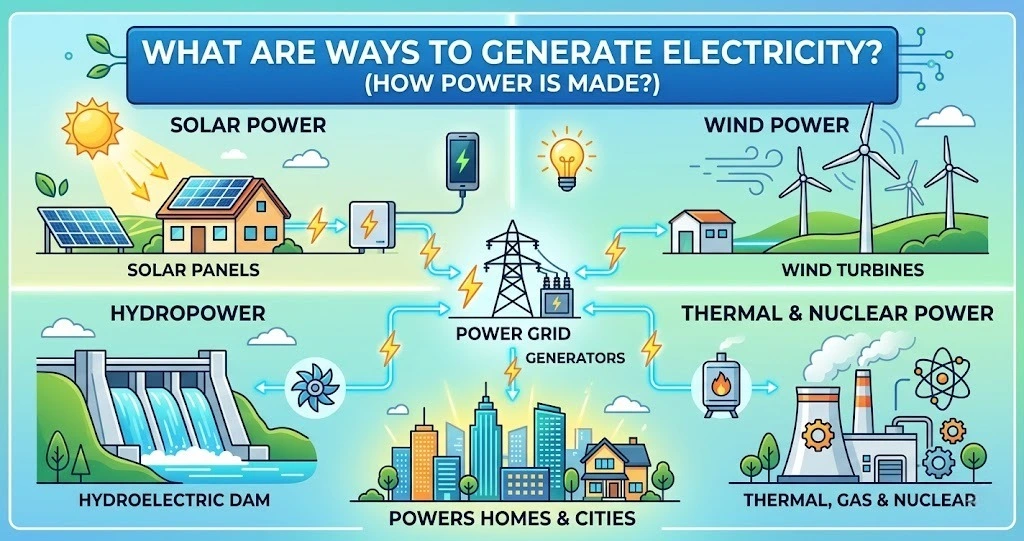
An inverter is an electrical device that converts direct current power into alternating current power, which is the plain answer to what is an inverter for most people searching. Some call it a power inverter, some just call it an inverter, but the job basically stays the same. Solar panels, batteries, and vehicle systems all produce DC, while home appliances and the electric grid run on AC. Without an inverter, that power would never reach anything useful in your house.
Key Takeaways
- An inverter converts DC power into AC power so that everyday appliances can be operated.
- The three common types are solar inverters, hybrid inverters, and pure sine wave inverters.
- According to Sandia National Laboratories, grid-connected solar inverters typically convert more than 95 percent of DC input into usable AC electricity.
- Most inverters last for 10 to 15 years, which is significantly less than the 25- to 30-year lifespan of solar panels.
What Is an Inverter?
An inverter is a piece of electrical equipment that changes direct current (DC) into alternating current (AC). DC flows in a single, steady direction, the kind of power you get from a solar panel, a car battery, or an AA battery. AC power switches direction back and forth many times per second, and it’s the standard used by homes, offices, and the electric grid across the US. That single stage of conversion is, in fact, the complete answer to the question of what an inverter is.
Think of an inverter as a translator sitting between two devices that speak different electrical languages. Your solar panels or battery bank speak DC. Your refrigerator, TV, and wall outlets only understand AC. If you have ever typed “What is an inverter?” into Google in search of a simple, easy-to-understand explanation, then this is that very explanation. Instead, if you search “What is a power inverter?” you will get the exact same answer, because both terms describe the same device.
What Does an Inverter Do?
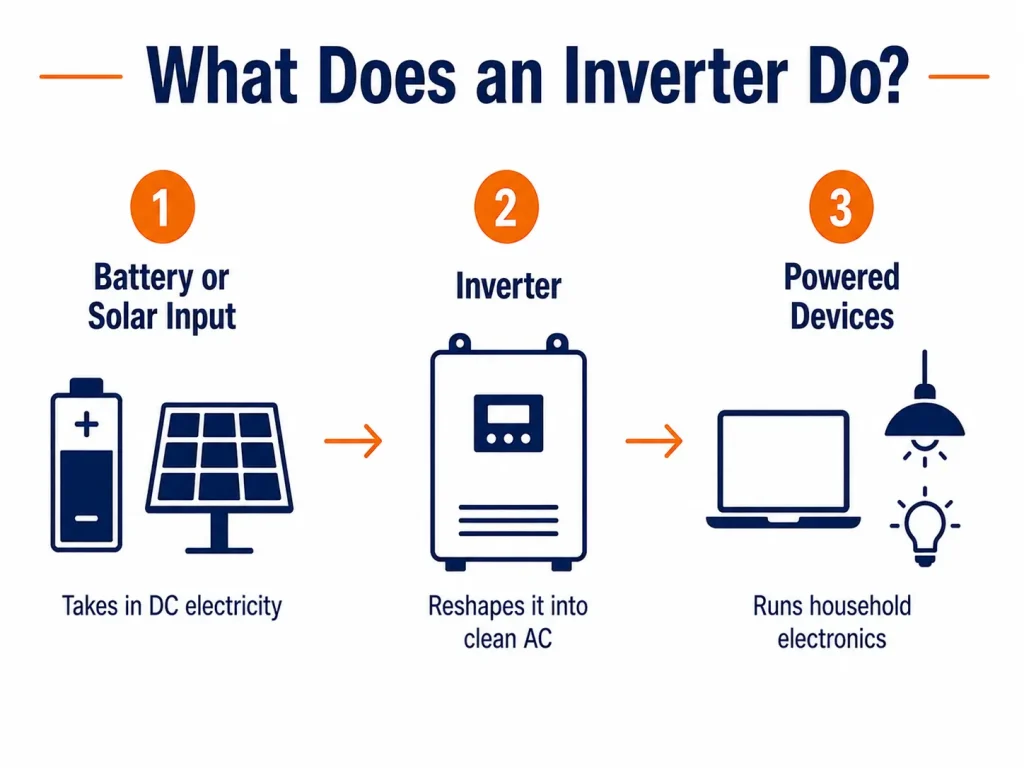
Understanding what an inverter actually does is naturally grounded in the fundamental concept of what an inverter is at a basic level. It takes DC electricity from a battery, solar array, or vehicle system and reshapes it into a clean AC waveform that matches what household electronics expect, typically 120 volts at 60 hertz in the US. Many inverters also regulate voltage and shut down automatically if something goes wrong.
A camper running a laptop from a car battery needs an inverter to make this connection work. The same applies to the owner of this house, whose lights remain on even during a power outage, because the battery bank and inverter kick in immediately as soon as the grid supply is cut off. Different scale, but the function remains the same, and it’s a good everyday answer to what a power inverter does beyond the textbook definition.
The exact process inside an inverter, how it chops and reshapes DC into AC using switching transistors, involves a few more moving parts than the basic “What does an inverter do?” answer above. We break that mechanical process down in our dedicated guide on how an inverter works. If you’re comparing higher-wattage models and thinking, “What does a power inverter do differently at that scale?” It just handles a bigger load since the underlying process doesn’t change.
What are the 3 types of inverters
Solar Inverter
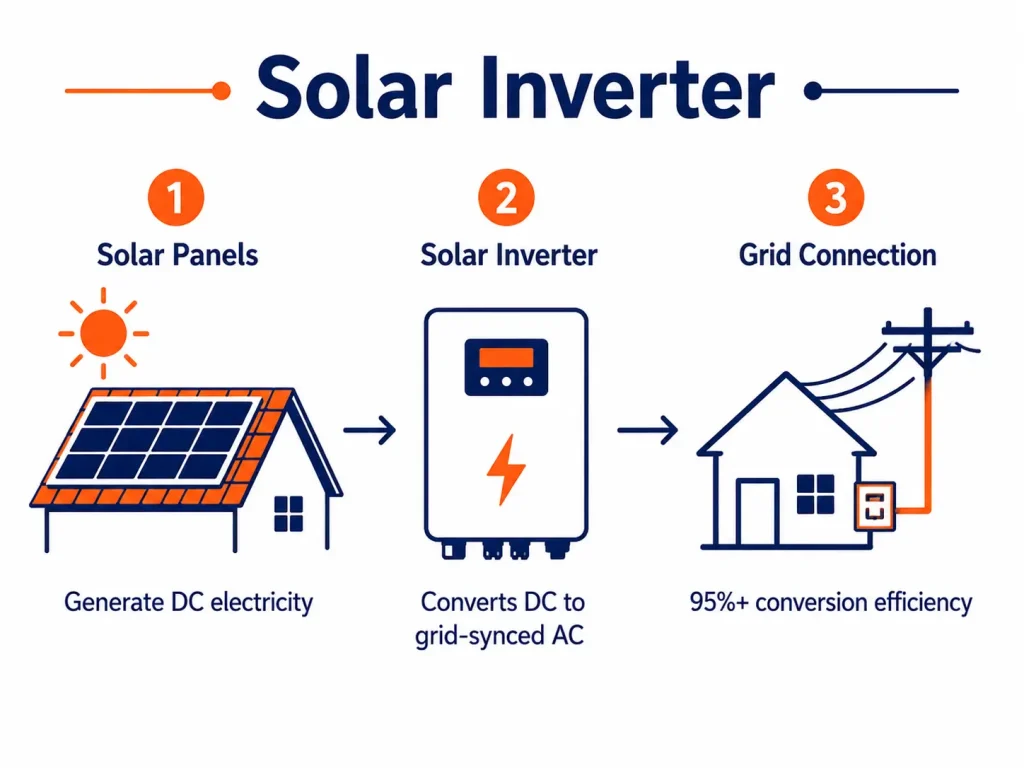
A solar inverter is the component that turns the DC electricity your solar panels generate into AC power your home can use. In grid-tied systems, it also synchronizes that output with the utility grid’s voltage and frequency, and that step is what allows net metering. For those installing rooftop systems, the solar inverter provides a specific answer to the question “What is an inverter”; in fact, a solar inverter is a specialized type of “power inverter” designed for solar panel systems. That’s usually what people mean when they type “What is a solar inverter?” into a search bar.
Grid-tied inverters used in most home solar installations convert more than 95% of the DC power they receive into usable AC, according to Sandia National Laboratories’ testing protocols. That efficiency is one reason people researching what a solar inverter is often find it discussed right alongside panel efficiency.
Hybrid Inverter
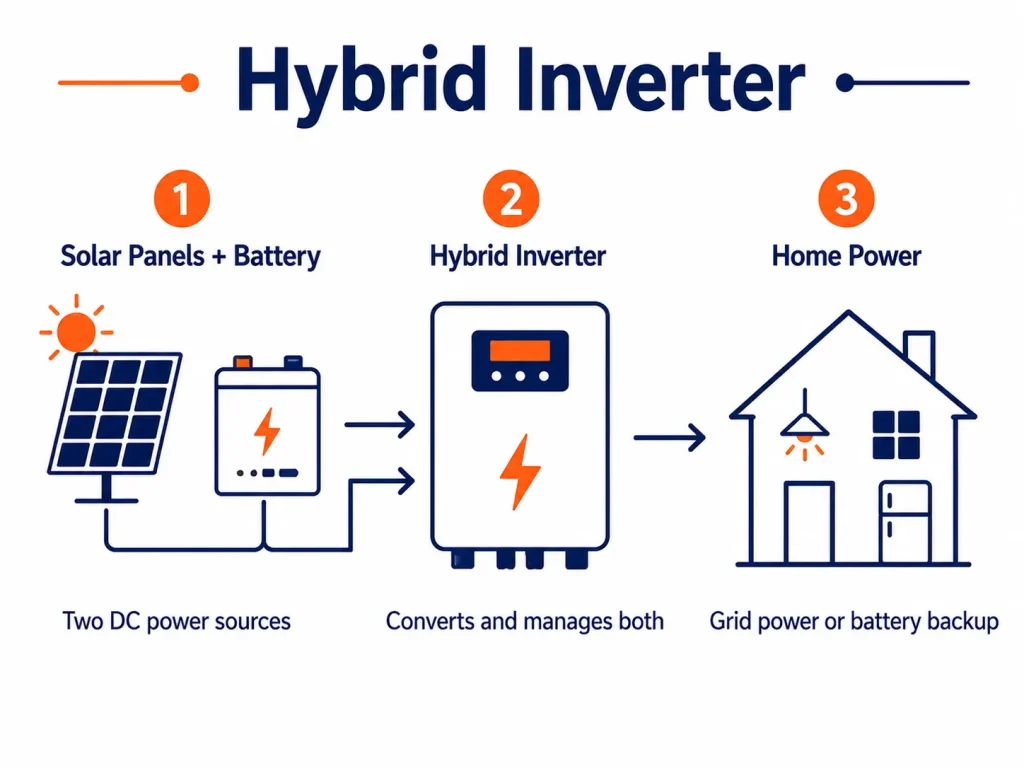
A hybrid inverter does two things that used to require separate hardware, converting solar DC into AC and managing a connected battery bank at the same time. It can supply electricity to the grid and store it in batteries, drawing power from those same batteries during a blackout and automatically switching its operating mode. That combined role is the short answer to what a hybrid inverter is for anyone comparing it against a standard solar inverter.
This makes hybrid inverters a common choice for homeowners who want both solar savings and blackout protection without installing two separate systems. Efficiency ratings typically fall in a similar range to standalone solar inverters, though the added battery-management step can introduce a small amount of extra conversion loss.
Pure Sine Wave Inverter
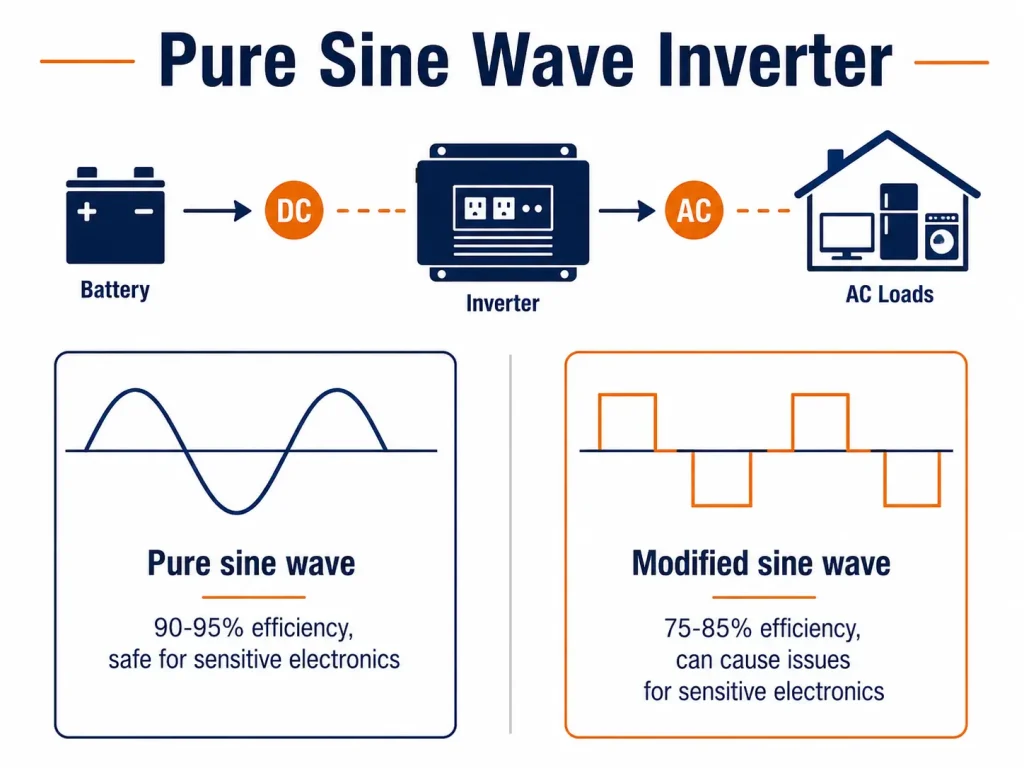
A pure sine wave inverter produces AC output that closely mirrors the smooth waveform coming out of a standard wall outlet. Lower-cost modified sine wave inverters approximate that wave using stepped, square-edged patterns instead, which works for simple tools but can cause problems for sensitive electronics. That cleaner output is the whole point behind what is a pure sine wave inverter as compared to its modified sine wave counterpart.
According to Penn State’s solar energy engineering coursework, high-quality pure sine wave inverters typically run at 90 to 95% efficiency, while modified sine wave units fall to around 75 to 85%. That gap matters if you’re running medical equipment or a sensitive motor, since a rough waveform can cause humming or damage over time.
Inverter Types Comparison Table
| Type | Primary Function | Best For | Typical Efficiency |
| Solar Inverter | Converts solar DC into grid-synced AC | Grid-tied home solar systems | 95%+ (Sandia PVPMC) |
| Hybrid Inverter | Converts solar DC to AC and manages battery storage | Solar-plus-battery, backup-ready homes | Similar to solar inverters, slightly lower under battery load |
| Pure Sine Wave Inverter | Produces a clean, grid-quality AC waveform | Off-grid systems, sensitive electronics | 90-95% (Penn State EME 812) |
What’s Difference Between Inverter & Generator
Once you understand what is an inverter on its own, the comparison below fills in the rest. A power inverter and a generator solve the same basic problem, keeping your devices running, but they get there in completely different ways. An inverter needs an existing DC power source and converts it into usable AC. A generator creates power on the spot, usually by burning gasoline, propane, or diesel to spin an internal alternator. If you set aside the marketing jargon, this is the fundamental difference between a generator and an inverter.
That difference shows up in daily use. Inverters run silently since there’s no engine involved, and they don’t need fuel as long as the battery or solar source stays charged. Generators run as long as fuel lasts and deliver more raw power but need ventilation and regular maintenance. Plenty of setups use both, which is the practical answer to what the difference between a generator and an inverter is for most homeowners.
What Is an Inverter Used For?
Inverters show up in more places than most people realize. In homes, they’re the backbone of solar power systems and battery backup setups, converting stored or generated DC into the AC power that runs lights, refrigerators, and routers during an outage. UPS units that protect computers and servers work the same way, and it’s one of the clearest real-world answers to the question of what an inverter is used for beyond solar panels.
Off-grid living depends on inverters just as much. RVs, camper vans, and boats typically run on a 12-volt battery system, so an inverter is what lets you plug in a laptop or power tool while parked far from any outlet. That’s often where the abstract idea of what an inverter is turns into something you actually use every day.
Inverters also play a smaller role outside the home. Electric vehicles use large inverters to convert battery DC into the AC power that drives the motor, and industrial facilities use them to control AC motors on manufacturing lines. Home backup, living off the grid, and small industrial uses show how inverters are used in many everyday lives.
Frequently Asked Questions
What is the purpose of an inverter?
An inverter’s purpose is converting DC electricity into AC electricity so it can power household devices and the electric grid, which is the practical core of what is an inverter for most homeowners.
What are the disadvantages of an inverter?
Inverters lose some power as heat during conversion, draw small standby power when idle, and wear out faster than the equipment they support. Most last 10 to 15 years, versus 25 to 30 for panels.
What is the difference between an inverter and a generator?
An inverter converts existing DC power, from a battery or solar panel, into AC power. A generator creates AC power by burning fuel to spin an alternator, needing no existing power source.
How does an inverter work when there’s no electricity?
During an outage, an inverter draws stored DC power from a connected battery bank and converts it into AC power for your home, working independently of the grid to keep essentials running.
Research
Research for this article was supported by publications from Sandia National Laboratories, Penn State’s solar energy engineering program, and EnergySage.